
When Can a Maryland Motorcycle Total Loss Exceed Book Value?
A motorcycle can look like a straightforward property-damage claim until the insurer’s valuation leaves out the parts that made the bike unique. After a crash, a rider may discover that an initial offer does not clearly account for aftermarket exhaust, upgraded suspension, custom paint, luggage, communications equipment, or recent maintenance.
For riders asking when a Maryland motorcycle total loss claim may exceed book value, the answer often depends on documentation, policy language, and the valuation method—not simply the motorcycle’s age or standard guide price. Murnane & O’Neill provides practical guidance for people evaluating these issues. Their practical motorcycle accident compensation claim tips can help explain how property damage and related losses fit into a broader claim.
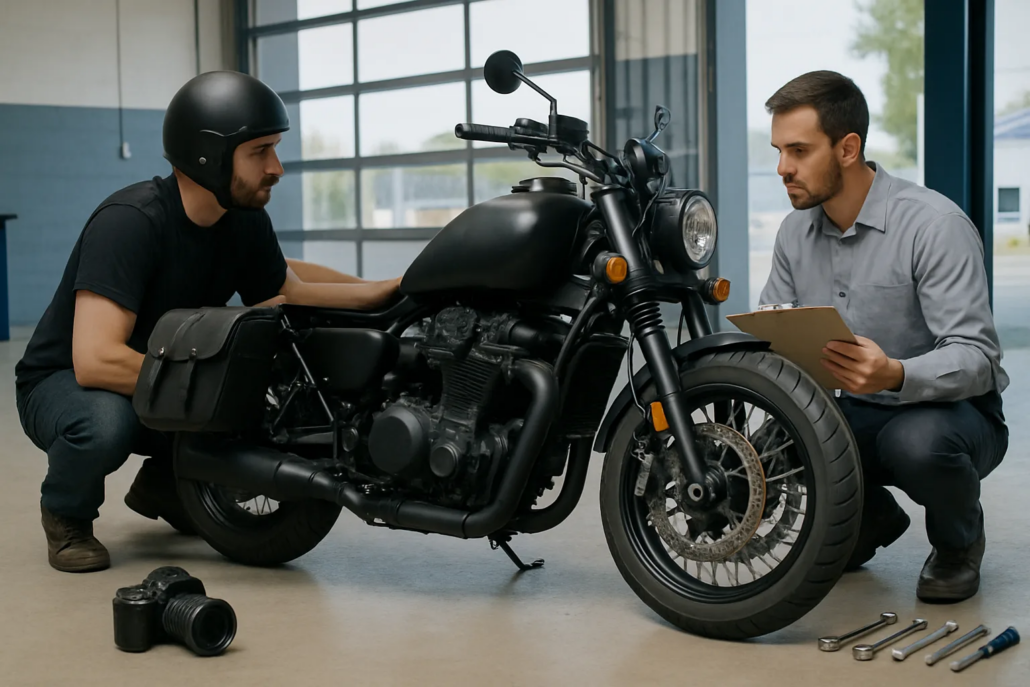
This guide covers how to photograph the motorcycle, preserve receipts and service records, document accessories, review a valuation report, arrange an inspection, and track towing or storage costs in Annapolis, MD; Pasadena, MD and elsewhere in Maryland.
When Can a Maryland Motorcycle Total Loss Claim Exceed Book Value?
“Book value” is usually a starting point, not necessarily a complete measure of what a damaged motorcycle was worth immediately before a collision. An insurer may compare the motorcycle with similar vehicles, adjust for mileage and condition, and then apply the policy’s coverage terms. The result may not fully reflect unusual equipment or a carefully maintained bike.
Why standard valuations may miss motorcycle-specific value
Motorcycles can be difficult to value when there are few genuinely comparable vehicles. Two bikes with the same year, make, and model may differ substantially because one has upgraded wheels, suspension, touring equipment, performance components, or professionally installed accessories. A valuation that treats those items as ordinary or ignores them altogether may not present a complete picture.
A rider pursuing a custom motorcycle insurance claim should distinguish between the motorcycle’s base value, the value of permanently installed improvements, removable accessories, and separate personal property. Whether an item is covered, how it is valued, and whether depreciation applies can depend on the policy and the facts of the loss.
What may support a higher valuation
Useful documentation may include:
- Purchase or financing records showing the motorcycle’s prior condition and configuration.
- Receipts for aftermarket parts, installation, customization, and recent service.
- Photographs taken before the crash, including close-ups of distinctive equipment.
- Advertisements or listings for genuinely comparable motorcycles in the local market.
- Inspection notes from a qualified mechanic or appraiser.
This does not mean every receipt will increase an offer dollar-for-dollar. It does mean the rider has evidence for discussing whether the insurer’s valuation reasonably accounts for the motorcycle as it existed before the crash.
How Should Riders Document Parts, Records, and the Valuation?
Strong property-damage evidence is often created before an insurer makes a final decision. Once the motorcycle is moved, dismantled, repaired, or disposed of, important details may be harder to establish. Riders can review the best evidence to preserve after a motorcycle crash for broader guidance on photographs and records.
Begin with a complete visual record when it is safe and reasonably possible. Take wide photographs showing the motorcycle’s overall condition and close-up photographs of damaged areas, identifying features, accessories, tires, controls, suspension, exhaust, luggage, and other equipment. Pre-crash photographs from a garage, riding trip, maintenance visit, or prior listing may also help show what was installed before the collision.
Keep original receipts, but also organize digital copies in a secure folder. Service invoices can show maintenance, installation dates, mileage, and the condition of parts. If a receipt is unavailable, a dealer invoice, bank record, warranty document, email confirmation, or statement from a repair professional may still help establish what was purchased or installed.
Reviewing an insurer’s report
Ask for the valuation report and review it for errors or omissions, such as:
- The wrong year, trim, mileage, or condition classification.
- Missing aftermarket parts, custom work, or touring accessories.
- Comparisons to motorcycles with materially different equipment or condition.
- Adjustments that are unexplained or appear inconsistent.
- A failure to identify whether the valuation concerns the motorcycle alone or includes covered accessories.
In Annapolis, MD; Pasadena, MD and throughout Maryland, the responsible insurer may also request an inspection. The rider may be able to ask questions about who will perform it, what will be inspected, and whether damaged parts will be retained. Policy terms and the circumstances of the crash matter, so a valuation dispute is not resolved by a single universal formula.
What Process and Cost Mistakes Can Affect a Motorcycle Total Loss?
A total-loss dispute is not limited to the motorcycle’s headline value. Towing, storage, inspection, dismantling, transportation, and other property-related expenses can accumulate while the claim is being reviewed. Riders should save invoices and payment confirmations and keep a simple timeline showing where the motorcycle was located and why each expense was incurred.
Guidance on Maryland property-damage documentation after a collision may also be useful because the same basic recordkeeping principles apply to motorcycle property damage. Ask for important insurer decisions in writing, including whether the motorcycle is considered a total loss, how the value was calculated, and which expenses or accessories are included or excluded.
Common mistakes riders make after a motorcycle crash include:
- Agreeing to an early payment before reviewing the valuation report.
- Removing, discarding, or selling damaged custom parts before they are documented or inspected.
- Relying on a verbal promise that accessories or storage charges will be covered.
- Failing to check whether the motorcycle and separate equipment are treated differently under the policy.
- Allowing storage charges to continue without asking about inspection timing or alternatives.
A rider may also hear the term “diminished value.” In Maryland, whether diminished value is available depends on the claim, applicable coverage, evidence, and legal issues involved. It should not automatically be assumed that a total-loss claim or a repair claim will include that category. The same caution applies to upgraded parts: the cost of an improvement does not necessarily equal its pre-crash market value.
If the insurer’s offer omits major equipment, uses poor comparisons, or leaves towing and storage unresolved, Pasadena motorcycle accident lawyers who can review a disputed valuation may be able to evaluate the issue. A legal review can help clarify what evidence exists and what questions should be directed to the insurer, without promising a particular result.
Frequently Asked Questions
Does book value include aftermarket motorcycle parts?
Not always. A standard valuation may account for factory equipment but fail to separately identify upgrades, custom work, or accessories. Coverage and valuation may depend on the policy, the type of part, installation quality, condition, and available market evidence. Receipts, photographs, service records, and an inspection can help establish what was on the motorcycle before the crash. An attorney can review the policy and facts to explain possible options.
Can I choose who inspects my damaged motorcycle in Maryland?
The insurer may have inspection procedures, and the policy may address how damage is evaluated. A rider can generally ask who will inspect the motorcycle, what qualifications or information will be used, and whether a second inspection or independent appraisal is available. The answer may vary by policy and claim circumstances in Maryland. Damaged parts should generally be preserved until the inspection and documentation process is reasonably complete.
Who pays motorcycle towing and storage costs after a crash?
Responsibility for towing and storage may depend on available insurance coverage, fault, authorization, reasonableness, and the length of storage. Keep every invoice and ask the insurer to explain in writing whether the charge is accepted, disputed, or subject to policy limits. Promptly documenting where the motorcycle is stored and why can help avoid confusion, although it does not guarantee reimbursement.
Is an appraisal useful for a customized motorcycle?
It may be useful when the motorcycle has unusual equipment, limited comparable listings, or a disputed condition classification. An appraiser or qualified mechanic may document the motorcycle’s configuration and condition, but the report is only one piece of evidence. Its usefulness can depend on the person’s qualifications, methodology, and the policy or claim issues being evaluated.
How Murnane & O’Neill Can Help
Murnane & O’Neill is dedicated to helping injured riders and property-damage claimants understand the evidence relevant to a motorcycle crash. The firm can review photographs, receipts, service records, valuation reports, inspection issues, and towing or storage documentation to help identify questions about a disputed Maryland motorcycle total loss claim.
The firm is committed to fighting for clients’ rights while explaining the legal process in clear terms. If an insurer has undervalued a customized motorcycle or pressured you to accept an offer before the records are complete, contact Murnane & O’Neill for a free consultation or case evaluation.
The information in this article is for educational purposes only and does not constitute legal advice. Contact a qualified attorney licensed in Annapolis, MD; Pasadena, MD for advice specific to your situation.




Leave a Reply
Want to join the discussion?Feel free to contribute!