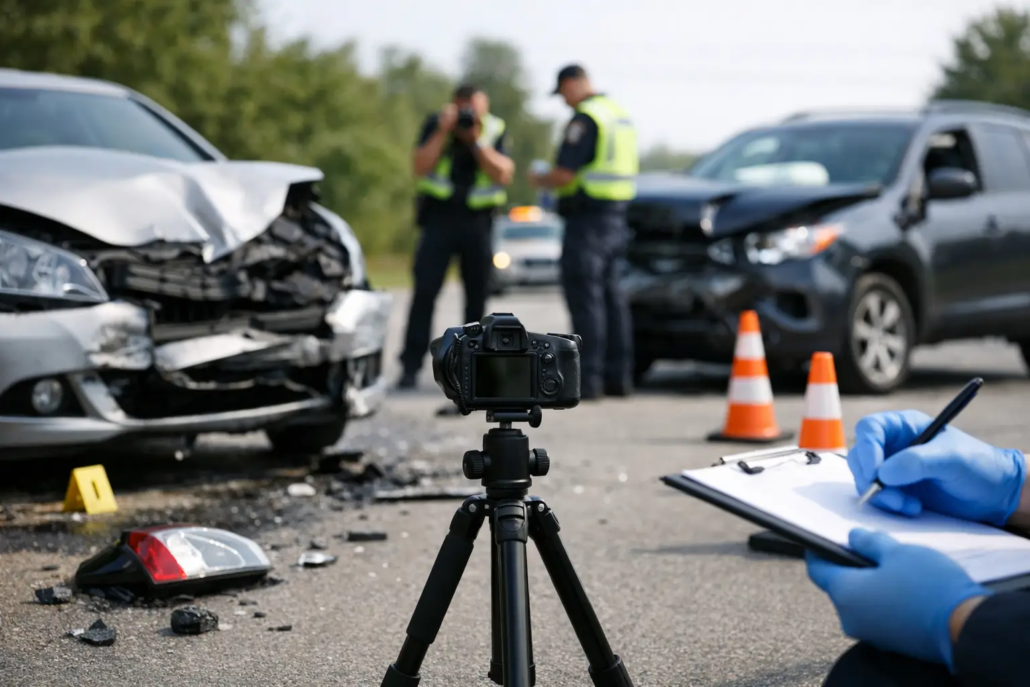
Collision Scene Preservation After a Crash
A violent collision can turn an ordinary Pasadena drive into a confusing, painful, and expensive crisis in seconds. In that first hour, collision scene preservation may determine whether critical proof remains available or disappears before anyone can examine it. Your health and safety come first, but protecting evidence should begin as soon as it can be done safely.
A police report is useful, but it is not the entire case. It may not capture skid marks before rain washes them away, a blocked sightline, the timing of a traffic signal, vehicle damage patterns, or a witness who leaves before an officer arrives. For an injured person, these details can make a real difference when an insurance company disputes fault or minimizes the seriousness of the crash.
Collision Scene Preservation Starts With Safety
Do not stay in danger to take photographs. Move yourself and others out of traffic if you can do so safely, call 911, and seek medical attention. If a vehicle is creating a hazard and can be moved without worsening anyone’s condition, follow the directions of responding officers. Never argue with the other driver or attempt to investigate a situation that feels unsafe.
Once the immediate danger is addressed, use your phone to create a clear record. Photograph the vehicles from several distances, including their final positions if possible. Take close images of impact points, deployed airbags, broken glass, debris, tire marks, damaged guardrails, road signs, lane markings, and anything that affected visibility or traction.
Video can be especially helpful. A slow walk-around video may capture the overall scene, weather, traffic flow, roadway grade, and nearby businesses or homes with cameras. Say the date, time, and location aloud only if doing so is safe and does not interfere with police or emergency personnel. Do not edit, crop, filter, or post the original photos and video online. Keep the originals backed up in more than one place.
Record Facts, Not Conclusions
After a crash, people often feel pressured to explain what happened. Focus instead on accurate, basic information: the other driver’s name, insurance details, license plate, vehicle description, and the names of responding agencies. If you can identify witnesses, ask for their names and reliable contact information.
Avoid statements such as “I never saw you” or “I am fine.” A person may feel shock, adrenaline, or pain that develops hours later. You do not need to decide fault at the roadside. Give police truthful information, obtain medical care, and let the evidence be evaluated carefully.
Evidence That Can Disappear Fast
Physical scenes change quickly. Rain, road crews, traffic, towing, and vehicle repairs can erase the best proof of how a collision occurred. Surveillance footage may be overwritten within days. Commercial trucks may continue their routes, and electronic data can be lost or overwritten if prompt preservation steps are not taken.
That is why a serious injury claim should not rely only on memory. Depending on the crash, evidence may include the vehicles themselves, airbag control module data, event data recorder information, dash-camera recordings, phone records, traffic-camera footage, maintenance files, driver qualification records, delivery logs, and drug or alcohol testing records. Not every source applies in every case. The facts determine what should be pursued and how quickly.
Do not authorize repairs, disposal, or salvage of your vehicle before discussing the issue with a qualified injury lawyer when the crash involves significant injuries, disputed fault, a commercial vehicle, a motorcycle, a pedestrian, or a possible defective part. An insurer may want to inspect the vehicle, and you need to cooperate reasonably, but the vehicle can also be vital evidence for your claim. Preserve repair estimates, towing receipts, storage records, and all communications about the vehicle.
Protect Digital Evidence, Too
Modern vehicles and phones often contain more information than people realize. A dash camera may overwrite recordings automatically. A phone may hold photos, call logs, navigation history, or messages that establish the timing of events. A connected vehicle may retain data relevant to speed, braking, steering, or impact forces.
Do not alter this information or try to extract technical data yourself. Save what you have, turn off automatic deletion where appropriate, and keep a written note describing where each item came from and when you saved it. That simple record helps show that the evidence is authentic and has not been changed.
Social media deserves the same caution. Do not post crash images, discuss blame, or comment on your physical condition while a claim is pending. Insurance investigators can look for posts that they believe contradict an injury claim. Privacy settings are not a guarantee that a post will stay private.
When Police Reports and Photos Are Not Enough
Maryland crash cases can become contested even when the damage appears obvious. The other driver may change their story. A trucking company may deny its driver was tired, distracted, or pressured by scheduling. An insurer may argue that a preexisting medical condition, rather than the collision, caused your symptoms.
Early investigation gives an injured person a fairer chance to answer those arguments. A lawyer can move quickly to request records, identify potential camera footage, document vehicle conditions, and send preservation notices that instruct responsible parties not to destroy relevant materials. These notices matter because businesses do not necessarily know that an injured person needs their records unless they are formally placed on notice.
The need is even greater after a truck crash. A truck may be repaired quickly, returned to service, or moved outside Maryland. The evidence may involve the driver, motor carrier, cargo company, maintenance provider, or another business. A disciplined investigation looks beyond the driver at the scene and asks who controlled the vehicle, the route, the maintenance, and the safety decisions.
Work-related vehicle crashes and jobsite injuries raise similar concerns. An employer may control incident reports, equipment, video, safety policies, and witness access. Injured workers should report the incident promptly, get medical care, and keep copies of all paperwork they receive. They should not assume the employer’s investigation is designed to protect their financial interests.
What to Do in the Days After a Collision
The first days after a crash are often filled with doctor visits, missed work, calls from adjusters, and worry about bills. A few practical steps can protect both your health and your claim. Follow medical advice, attend recommended appointments, and tell your providers about every symptom. Save discharge papers, prescriptions, invoices, work restrictions, and mileage or other out-of-pocket expenses.
If an insurance adjuster calls, you can provide necessary basic information, but be careful about recorded statements or broad medical authorizations before you understand your rights. An early settlement offer may arrive before the full extent of your injuries, treatment needs, lost income, or vehicle evidence is known. Once a release is signed, the ability to seek additional compensation may be gone.
Write down what you remember while the details are fresh. Include the direction you were traveling, the lane you occupied, traffic conditions, weather, what you observed before impact, and what happened afterward. Keep it factual. This is not a substitute for an investigation, but it can help preserve details that become harder to recall over time.
Direct Legal Help for Injured Maryland Families
For people hurt in Pasadena, Glen Burnie, Severna Park, Annapolis, and throughout Anne Arundel County, delay can cost evidence that cannot be recreated later. Injury Attorney Jake Senkel understands that an injury claim is not paperwork alone. It is a fight to establish what happened, identify every responsible party, and pursue compensation that reflects the real impact on your life.
Since 1986, Hal Murnane has provided lawyer-led representation to injured people who need more than an impersonal claims process. Serious cases require prompt attention, professional preparation, and aggressive advocacy. You should be able to speak with an attorney, understand the next step, and know that someone is protecting your interests while you focus on healing.
If a crash has left you injured, preserve what you can without putting yourself at risk, keep your records, and seek legal guidance before evidence, deadlines, or your leverage slip away. The strongest next step is often taken early, when the scene still has a story to tell.