
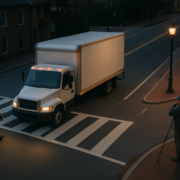
What Should Pedestrians Save After an Annapolis Truck Crash?
A commercial truck and a pedestrian can occupy the same roadway for only a few seconds, yet those seconds may raise detailed questions: Where was the pedestrian? What could the driver see? Was the truck turning, backing, or traveling straight? Did lighting, mirrors, cameras, or an obstruction affect visibility? For an injured person or family searching for an Annapolis pedestrian truck accident lawyer, the answers may depend on evidence that changes or disappears quickly. Annapolis truck accident lawyers can help readers understand why early documentation may matter when investigators evaluate a truck’s sight lines, speed, turning path, and the pedestrian’s visibility.
This guide explains the evidence commonly examined after a Maryland pedestrian is hit by a truck. It covers emergency care, photographs, witness information, nearby video, clothing and footwear, police records, symptom documentation, and commercial-truck data. It also explains how reconstruction may address the crossing location, lighting, mirrors, blind spots, warning systems, and the truck’s opportunity to detect the pedestrian. Murnane & O’Neill provides this information as a starting point for understanding the issues, not as a prediction about any particular claim.
What Evidence Matters After a Pedestrian Truck Accident in Annapolis?
The strongest claim often depends on several types of evidence working together. One photograph or witness statement may not answer every question, but a coordinated record can help show what happened before, during, and after the impact.
Medical care and symptom documentation
Emergency evaluation creates an early record of reported symptoms, observed injuries, testing, and discharge instructions. Follow-up appointments, rehabilitation records, prescriptions, and work or activity restrictions may also help document how the injury affected daily life. A person should describe symptoms accurately to medical professionals and keep copies of records when available; treatment decisions belong to the patient and qualified providers.
Symptoms can change after a collision. Headaches, dizziness, confusion, pain, sleep changes, or difficulty with ordinary tasks may not all appear at once. A dated symptom log can help a person communicate changes to healthcare providers. This Maryland truck-crash brain injury documentation resource offers additional context about preserving medical information when symptoms are delayed or difficult to explain.
Photographs, clothing, and footwear
If medically and physically possible, photographs may document the roadway, crosswalk, signal placement, lighting, debris, weather, truck position, and visible damage. Clothing and footwear worn during the incident may also help preserve physical evidence, such as dirt, tears, or scuffing. They should generally be kept as found rather than washed, repaired, or discarded, unless a qualified professional gives different instructions.
A family member or another person can photograph the scene from multiple angles if the injured pedestrian cannot do so. The Maryland truck accident evidence guide discusses how photographs, records, witnesses, and vehicle information may fit together rather than relying on one item alone.
How Do Investigators Reconstruct a Truck-Pedestrian Crash?
Collision reconstruction is not limited to asking whether contact occurred. Investigators may examine the pedestrian’s route, the truck’s movement, the driver’s available sight line, and the timing of traffic and crossing movements. In Annapolis, MD, Glen Burnie, MD, or elsewhere in Anne Arundel County, the roadway layout and signal pattern may be important to that analysis.
Crossing location, lighting, and turning paths
Evidence may show whether the pedestrian was in a marked crosswalk, at an intersection, on a shoulder, or elsewhere on the roadway. The analysis can also consider the truck’s approach, lane position, turning radius, speed, braking, and whether the driver had time to detect and respond to a person in the travel path. Lighting conditions, parked vehicles, construction features, weather, and roadway design may affect what was visible.
A useful investigation may preserve the scene before conditions change. That can include noting the position of signals, crosswalk markings, nearby obstructions, and the locations of potential witnesses or cameras. The firm’s collision scene preservation after a crash resource provides related information about documenting a changing roadway environment.
Readers may also find this Annapolis intersection crash investigation helpful for understanding how investigators examine signals, lane positions, turns, and the timing of movements at intersections.
Mirrors, cameras, blind spots, and warning systems
Commercial trucks have different dimensions and visibility limitations than passenger vehicles. Depending on the truck and the event, investigators may examine side and rear mirrors, camera locations, backup alarms, proximity sensors, warning systems, and areas that were difficult to see from the driver’s position. A blind spot does not by itself resolve responsibility; the relevant questions may include what the driver could see, what the equipment showed, and what precautions were reasonably available.
Electronic information may provide another piece of the timeline. An event data recorder, electronic control module, telematics, onboard camera, or fleet system may contain information about speed, braking, throttle activity, location, or event timing. The available data varies by vehicle and carrier. This discussion of commercial truck black box evidence in Anne Arundel County explains why preservation and interpretation of electronic evidence can matter.
For a backing or maneuvering collision, photographs should show the truck’s rear and sides, mirror and camera locations, nearby obstructions, the pedestrian’s position, and the path the driver needed to monitor. Evidence involving photos showing a truck’s backing path and blind spots may be especially relevant when vehicle positioning is disputed.
What Should Families Preserve After a Maryland Pedestrian Is Hit by a Truck?
Families often have limited time and incomplete information after a serious collision. Generally, useful preservation steps may include:
- Requesting or recording the names and contact information of witnesses, without pressuring them to characterize fault.
- Photographing visible injuries, damaged personal property, clothing, footwear, and the surrounding scene when safe and appropriate.
- Identifying nearby businesses, residences, traffic cameras, delivery systems, or vehicles that may have recorded the event.
- Asking promptly about video retention because some systems routinely overwrite footage.
- Keeping discharge paperwork, medical bills, appointment information, rehabilitation records, and a dated symptom log.
- Obtaining information about the responding agency and asking how to request available police records.
Police reports can be useful, but they may not contain every detail needed for a reconstruction. A report may record statements, roadway conditions, diagrams, citations, or observations, while other evidence may come from video, vehicle data, medical records, or later interviews. Depending on the circumstances, an attorney may also examine dispatch records, driver qualification materials, training, supervision, maintenance, ownership, and carrier policies. This overview of Maryland trucking company liability beyond the driver explains why a commercial claim may involve more than the individual driver.
One common mistake is posting detailed conclusions about the collision before the evidence is reviewed. Another is discarding clothing, overlooking witnesses, or assuming that a missing camera recording means no other proof exists. Laws and procedures vary in Maryland and may change, so a qualified attorney can explain how the facts and available evidence may affect the evaluation of a claim.
Frequently Asked Questions
Should I photograph the truck after a pedestrian collision?
Photographs may be useful, but safety and medical needs come first. When it is safe and permitted, images can show the truck’s front, sides, rear, mirrors, cameras, damage, roadway position, and nearby obstructions. A family member may be able to preserve these details if the injured person cannot. Do not enter restricted areas or interfere with an investigation. The value of photographs depends on what they accurately show and how they fit with other evidence.
Can nearby businesses have video of a truck-pedestrian crash?
They may, depending on camera placement, image quality, and retention practices. Potential sources can include businesses, residences, traffic-management systems, parking facilities, delivery vehicles, and nearby drivers. Video may clarify timing, traffic signals, lighting, movement, and visibility. Families may identify possible sources and ask about preservation promptly, because some systems overwrite footage. An attorney can discuss appropriate methods for seeking available recordings in a particular matter.
Why do clothing and footwear matter after a truck crash?
Clothing and footwear may contain physical details such as tears, dirt, scuffing, or transfer marks that could help explain contact or movement. They may also support a record of what the pedestrian was wearing. If possible, keep these items clean, dry, and separated from other objects rather than washing, repairing, or discarding them. Physical evidence should be handled carefully, and its significance generally requires context from the scene and other records.
Does a police report decide who is responsible?
A police report can provide important information, including recorded statements, observations, diagrams, and roadway conditions. It is not necessarily the complete reconstruction of a commercial truck-pedestrian collision, however. Responsibility may also depend on video, witness accounts, vehicle data, medical documentation, signal timing, lighting, and expert analysis. Maryland legal issues can be fact-specific, so a report is usually considered alongside the broader evidence rather than in isolation.
How Murnane & O’Neill Can Help
Murnane & O’Neill is dedicated to helping injured pedestrians and families understand the evidence that may matter after a commercial truck collision in Annapolis, MD, Glen Burnie, MD, and surrounding Maryland communities. The firm is committed to fighting for clients’ rights while evaluating medical records, scene evidence, witness information, video sources, vehicle data, and potential trucking-company involvement. Each situation depends on its facts, available records, and applicable Maryland law. Contact Murnane & O’Neill for a free consultation or case evaluation to discuss your situation and legal options.
The information in this article is for educational purposes only and does not constitute legal advice. Contact a qualified attorney licensed in Annapolis, MD; Glen Burnie, MD for advice specific to your situation.


