
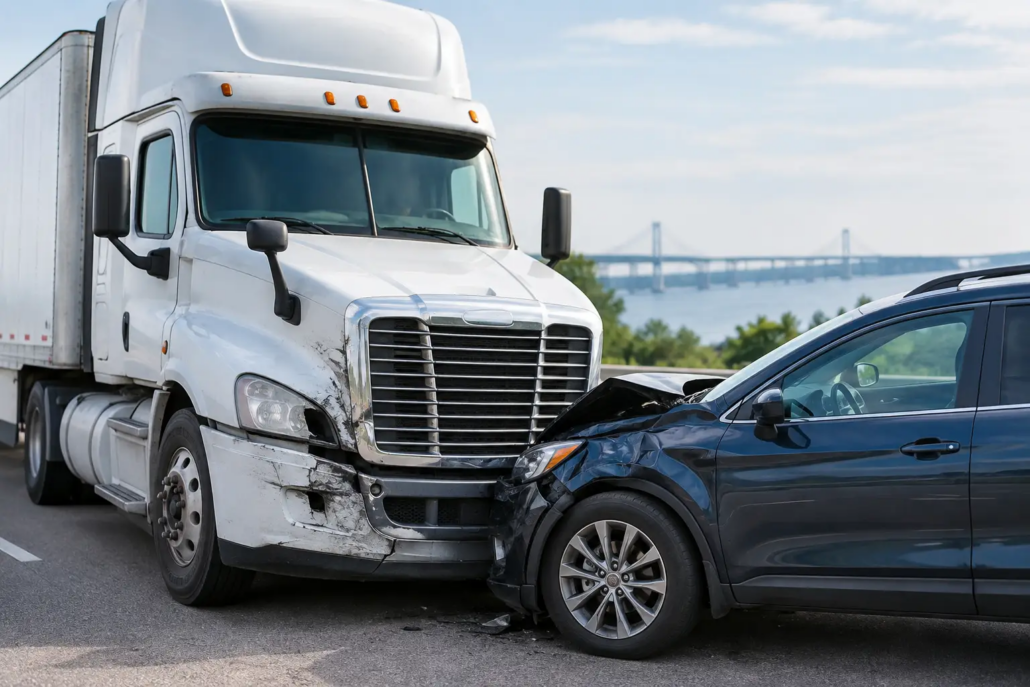
Commercial Vehicle Collision Guide for Maryland
A crash with a delivery van, work truck, dump truck, utility vehicle, or tractor-trailer can change the course of a day in seconds. This commercial vehicle collision guide is for Maryland drivers and passengers who are hurt and need to protect both their health and their right to compensation. The company behind the vehicle may have investigators, insurers, and lawyers working quickly after the collision. You deserve experienced legal advocacy working just as hard for you.
What Makes a Commercial Vehicle Crash Different?
A commercial vehicle collision is rarely just a two-driver insurance claim. The vehicle may be owned by one company, operated by another, leased through a third business, or maintained by an outside contractor. A driver may have been on the clock, making deliveries, transporting equipment, responding to a service call, or rushing to meet a deadline.
That matters because more than one party may bear responsibility. Depending on the facts, a claim may involve the driver, the driver’s employer, a vehicle owner, a maintenance company, a freight broker, a contractor, or a manufacturer. Identifying every responsible party is a serious part of protecting the full value of a claim.
Commercial vehicles can also cause more severe harm. Their size, weight, load, and stopping distance can turn a careless lane change or distracted-driving incident into a life-altering crash. Even a smaller company van can cause substantial injuries when it strikes a pedestrian, motorcyclist, cyclist, or passenger vehicle.
The First Steps After a Commercial Vehicle Collision
Your first priority is medical care. Call 911, accept evaluation at the scene when appropriate, and follow through with recommended treatment. Adrenaline can hide pain after a crash. Head injuries, neck and back injuries, internal injuries, and soft-tissue damage are not always obvious immediately.
If you are able to do so safely, photograph the vehicles, road conditions, traffic signals, skid marks, debris, visible injuries, and the commercial vehicle’s identifying information. Capture the company name, vehicle number, license plate, Department of Transportation number if present, and any logos or markings. Ask for the police report number and obtain contact information from witnesses.
Do not argue about fault with the driver or make statements that minimize your injuries. A simple statement such as “I’m okay” may be repeated later by an insurance carrier, even when you later learn you were seriously hurt. You can cooperate with law enforcement while avoiding speculation about what happened.
For injured people in Pasadena, Glen Burnie, Severna Park, Annapolis, and throughout Anne Arundel County, prompt legal guidance can also help preserve evidence before it disappears.
Be Careful With the Insurance Company
Commercial insurers often contact injured people early, sometimes before the full extent of an injury is known. They may request a recorded statement, offer a quick settlement, or ask for broad medical authorizations. Their goal is to limit what the company pays, not to determine what your recovery should truly be.
A quick offer can be tempting when medical bills arrive and work is missed. But settling too soon can leave you responsible for future care, lost earning capacity, pain, and other losses that were not apparent in the first days after the collision. Once a release is signed, reopening the claim is usually not an option.
Evidence Can Decide a Commercial Vehicle Claim
The strongest commercial vehicle cases are built on evidence gathered early and analyzed carefully. Unlike an ordinary passenger-car collision, a commercial vehicle may generate records that reveal whether the driver or company ignored safety obligations.
Useful evidence can include the police report, photos, witness accounts, dash-camera footage, nearby surveillance video, driver logs, dispatch records, GPS data, electronic braking or event-data records, inspection reports, maintenance records, and the driver’s training or disciplinary history. In truck cases, hours-of-service records and cargo documentation may also be critical.
Some of this information is controlled by the company, and retention periods may be limited. An attorney can take steps to demand that relevant evidence be preserved. Waiting too long can make it harder to establish why the collision happened and who should be held accountable.
Common Causes of Commercial Vehicle Crashes
Commercial drivers face real pressures, but pressure is not an excuse for unsafe conduct. Delivery schedules, long shifts, unfamiliar routes, distracted dispatch communications, and poor company supervision can all contribute to preventable wrecks.
Common causes include speeding, tailgating, unsafe turns, distracted driving, fatigued driving, improper lane changes, failure to yield, overloaded vehicles, defective brakes or tires, and inadequate maintenance. In other cases, a company may have hired an unqualified driver, failed to train a driver properly, or allowed a vehicle to remain in service despite known problems.
Maryland follows a strict contributory negligence rule. In many cases, an injured person who is found even partly at fault can be barred from recovering damages. That rule makes thorough investigation especially important. Insurance companies understand it and may look for statements, photos, or gaps in the record that allow them to shift blame onto the person who was hurt.
Compensation After a Commercial Vehicle Collision
The value of a claim depends on the injury, available insurance, evidence of fault, medical prognosis, and the effect the collision has had on your life. A proper claim should account for more than the first emergency room bill.
Compensation may include medical expenses, rehabilitation costs, lost wages, reduced future earnings, property damage, physical pain, emotional distress, and loss of enjoyment of life. When a collision causes fatal injuries, surviving family members may have a wrongful death claim and other related claims under Maryland law.
There is no honest one-size-fits-all settlement number. A person with a fractured bone that heals fully faces a different claim from someone living with traumatic brain injury, chronic pain, or permanent mobility limitations. The right approach is to document the actual impact of the injury and pursue a recovery that reflects it.
When the Crash Happened While You Were Working
Commercial vehicle collisions can create overlapping legal issues when the injured person was working at the time. For example, a utility worker, delivery driver, sales representative, construction worker, or employee driving between job sites may qualify for workers’ compensation benefits.
Workers’ compensation can provide medical care and wage benefits, but it may not fully address every loss. If a negligent third party caused the crash, such as another company’s driver, the injured worker may also have a personal injury claim. The interaction between those claims must be handled carefully because liens and reimbursement rights can affect the final recovery.
This is one reason direct attorney involvement matters. A lawyer should evaluate every available path to compensation rather than treating the claim as a routine insurance file.
When to Speak With an Attorney
You should consider legal help promptly if the collision involved a commercial vehicle, if you needed medical treatment, if fault is disputed, or if an insurer has contacted you for a statement or settlement. Serious crashes call for serious preparation.
An experienced plaintiff-side attorney can investigate the collision, identify responsible parties, preserve records, calculate damages, negotiate from a position of strength, and take the case to court when a fair resolution is not offered. Injury Attorney Jake Senkel understands that injured clients need clear answers and determined representation, not a call center and a case number.
Do not let a company’s insurer define your injuries, your losses, or your future. Get medical care, protect the evidence, and speak with a lawyer who will take responsibility for pursuing the compensation your case demands.





Leave a Reply
Want to join the discussion?Feel free to contribute!