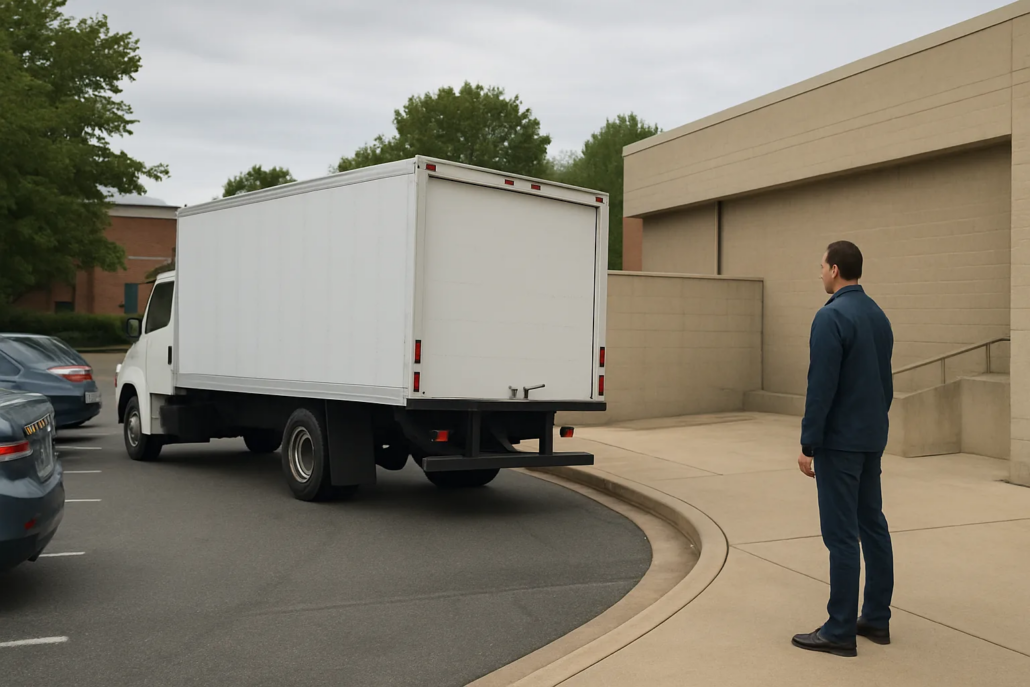
How Can a Backing Truck Accident Lawyer Use Photos?
Backing truck crashes can look simple at first: a commercial vehicle reverses, another vehicle or a pedestrian is struck, and everyone tries to determine what happened. In practice, these collisions often create disputed accounts and limited physical evidence. A delivery truck may move only a few feet before contact, while pedestrians, motorists, loading-area users, and security cameras are all positioned differently.
For anyone searching for an Annapolis backing truck accident lawyer, the central issue is often proof rather than speed. Why was the truck reversing? Could the driver see the area behind the vehicle? Was a warning alarm audible? Did a spotter assist? Did the parking lot or loading area limit visibility? Murnane & O’Neill provides guidance on the evidence that may help answer those questions. This article explains what to document, how camera footage and witnesses can matter, and why the driver’s intended maneuver and property design may be important in Maryland claims.
Why Are Backing Truck Crashes So Difficult to Prove in Annapolis Parking Lots?
Unlike a highway collision, a parking-lot crash may not leave a clear lane pattern, traffic signal sequence, or long skid marks. Vehicles may be moving through loading spaces, drive aisles, fire lanes, or areas where pedestrians and cars share limited room. The same collision can look different depending on whether the truck was beginning a turn, completing a delivery, repositioning, or leaving a dock.
In Annapolis, MD, and Glen Burnie, MD, commercial vehicles may operate in retail lots, apartment communities, medical facilities, warehouses, and narrow access roads. These locations can have changing conditions: parked cars, stacked goods, dumpsters, snow or rain, delivery congestion, and blind corners. Those details may disappear before an investigator or attorney can inspect the scene.
Vehicle position can tell only part of the story
Photographs showing the final positions of a truck, car, bicycle, or pedestrian can be useful, but they do not automatically establish where each person or vehicle was when the maneuver began. A truck may have moved after impact. A damaged vehicle may have been pushed or repositioned for safety. Measurements, photographs from multiple angles, and statements from people who saw the maneuver may provide additional context.
Low speed does not eliminate serious questions
A low-speed impact may produce less visible damage than a highway collision, yet a person can still report significant pain or other symptoms. This article does not diagnose injuries, but prompt medical documentation can help connect reported conditions with the event. The legal significance of an injury depends on the facts and available evidence.
What Evidence Helps Establish a Delivery Truck Backing Accident in Maryland?
A strong investigation usually compares several types of evidence instead of relying on one photograph or one account. In a delivery truck backing accident in Maryland, useful information may include:
- Scene photographs: Capture the truck, other vehicles, curb lines, loading areas, travel paths, sight obstructions, lighting, pavement markings, and nearby structures from several viewpoints, when it is safe to do so.
- Vehicle positions and damage: Note where each vehicle or person was located immediately after the collision, whether a truck was angled, and which surfaces show contact or scraping.
- Warning systems: Document whether the truck had a backup alarm, camera, mirrors, side guards, or other visibility equipment. Do not assume equipment was working or audible without investigating the facts.
- Camera footage: Retail stores, apartment managers, garages, and nearby businesses may have surveillance systems. Footage can be overwritten, so identifying potential cameras promptly may be important.
- Witness information: Record names and contact details, if available, and ask witnesses to preserve their own photographs or notes rather than trying to pressure them into a particular description.
- Driver and company records: Depending on the circumstances, an attorney may investigate delivery instructions, route information, inspection records, training materials, vehicle telematics, or communications about the maneuver.
A police report can provide an initial account, but it may not resolve every disputed detail in a parking lot truck crash. Insurance companies may also focus on statements made shortly after the event. Preserving physical and digital evidence can therefore be important in Annapolis, MD, and throughout Anne Arundel County.
How Do Driver Intent and Property Design Affect a Parking Lot Truck Crash Claim?
Backing collisions often turn on what the driver intended to do and whether the maneuver was reasonably visible and controlled. For example, a driver may have been reversing directly from a loading space, backing while turning, or moving forward after a failed approach. Each maneuver creates different sightlines and potential paths for a pedestrian or motorist.
An investigation may examine questions such as:
- Where did the driver begin the maneuver, and where was the truck expected to travel?
- Was the truck’s path clear, or were people and vehicles entering the area?
- Did the driver stop, check mirrors, use a camera, sound a warning, or obtain assistance from a spotter?
- Did a pedestrian or motorist have a reasonable opportunity to see or hear the truck?
- Did lot design, landscaping, walls, parked vehicles, poor lighting, or narrow lanes restrict visibility?
- Were delivery practices placing trucks in areas not designed for large commercial vehicles?
Property design does not automatically establish liability. A property owner, management company, delivery company, driver, or another party may have different roles depending on the facts and applicable Maryland law. An attorney may assess whether the location’s layout, maintenance, warnings, or traffic controls contributed to the event.
For residents and visitors in Glen Burnie, MD, potential evidence may include property-management footage, access-control records, delivery schedules, or maintenance records. These materials can help establish timing and movement, but they may be held by different entities and subject to different retention practices. Maryland rules concerning negligence and the parties who may be responsible can vary with the circumstances and may change over time.
What Mistakes Can Make a Commercial Vehicle Blind Spot Accident Harder to Prove?
People involved in a commercial vehicle blind spot accident may unintentionally lose useful evidence or create confusion about what occurred. Common problems include:
- Moving a vehicle before photographing its position, unless movement is necessary for safety or emergency access.
- Waiting too long to identify nearby cameras or asking a business to preserve footage without recording the request.
- Guessing about the truck’s speed, alarm, or driver’s line of sight instead of describing what was personally observed.
- Posting detailed theories, photographs, or accusations on social media.
- Giving a recorded statement to an insurer without understanding the questions or the available evidence.
- Failing to keep medical, wage, repair, or out-of-pocket records related to the incident.
Generally speaking, a person should prioritize immediate safety and appropriate medical attention. Depending on the circumstances, an attorney may advise preserving photographs, identifying witnesses, keeping relevant documents, and avoiding speculation. The Maryland filing deadline and other procedural requirements can depend on the claim, the parties, and the applicable law, so delay may affect available options.
A lawyer evaluating an Annapolis or Glen Burnie truck accident may compare photographs, statements, camera footage, vehicle data, site conditions, and medical records. The goal is not to assume that one party is responsible, but to develop a fact-based account of the maneuver and the resulting harm.
Frequently Asked Questions
Is a truck driver automatically responsible for a backing collision in Maryland?
No. Responsibility is not automatic merely because a truck was reversing. The facts may include the driver’s actions, the visibility available, warnings used, the conduct of others, and the condition or design of the location. Maryland negligence rules may also affect how a claim is evaluated. A qualified Maryland attorney can review the evidence and explain how the law may apply to the particular circumstances.
What if there were no witnesses to my parking-lot truck crash?
A claim is not necessarily impossible without an eyewitness. Photographs, vehicle damage, surveillance footage, electronic data, incident reports, property records, and medical documentation may help establish what occurred. However, evidence can be limited or disputed. Avoiding speculation and preserving available information may help an attorney assess whether the circumstances can be reconstructed.
Can a store or apartment complex share responsibility for a delivery truck accident?
Possibly, depending on the facts and Maryland law. The property’s layout, lighting, warnings, maintenance, traffic controls, and delivery practices may be relevant. A property owner or manager is not automatically liable for every collision on the premises. Evaluating responsibility generally requires examining control of the area, notice of a condition, and how that condition relates to the collision.
Should I contact an Annapolis backing truck accident lawyer after a low-speed impact?
A consultation may help you understand what evidence could matter, even when the collision occurred at low speed or caused limited visible damage. The significance of an incident depends on the injuries, property damage, disputed facts, insurance coverage, and applicable deadlines. Murnane & O’Neill can review the available information and discuss potential legal options without promising a particular result.
How Murnane & O’Neill Can Help
Murnane & O’Neill is dedicated to helping injured pedestrians, motorists, and property visitors understand the evidence involved in truck and personal injury claims. The firm is committed to fighting for clients’ rights while examining practical details such as vehicle positions, warning systems, camera footage, witness accounts, driver intent, and parking-lot design.
Whether a collision occurred in Annapolis, MD, Glen Burnie, MD, or another Maryland community, the team is ready to evaluate your situation and explain potential next steps. Contact Murnane & O’Neill for a free consultation or case evaluation.
Disclaimer: The information in this article is for educational purposes only and does not constitute legal advice. Contact a qualified attorney licensed in Annapolis, MD; Glen Burnie, MD for advice specific to your situation.