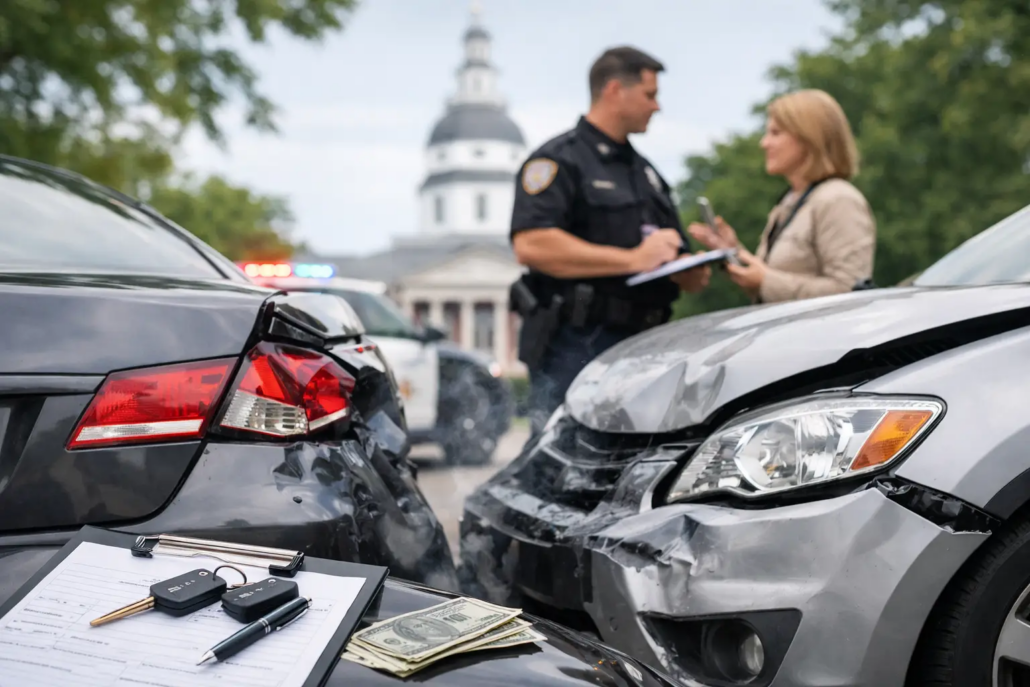
How Uninsured Driver Claims Work in Maryland
A driver hits you in Pasadena, your car is damaged, your body hurts, and then you learn the other driver has no insurance. That is the moment many people first ask how uninsured driver claims work. The short answer is that you may still have a path to compensation through your own auto policy, but these claims are rarely simple, and your own insurer does not automatically treat your claim like a favor.
In Maryland, uninsured motorist coverage exists to protect you when the at-fault driver has no liability insurance, cannot be identified, or leaves the scene in a hit-and-run. Most drivers carry this coverage as part of their own policy. That sounds straightforward, but the claim process often becomes a fight over fault, medical proof, coverage limits, and the value of your injuries.
How uninsured driver claims work after a crash
An uninsured driver claim usually starts like any other car accident claim. You report the crash, seek medical care, and notify your insurance company. The key difference is that instead of pursuing compensation only from the at-fault driver’s insurer, you may need to make a claim under the uninsured motorist section of your own policy.
That can feel backward. You paid premiums, so you expect cooperation. But insurance companies still review these claims with the same basic goal they apply elsewhere – limiting what they pay. They may question whether the uninsured driver caused the crash, whether your treatment was necessary, or whether your injuries were as serious as you say.
If the at-fault driver had some coverage but not enough to fully cover your losses, the claim may involve underinsured motorist coverage rather than uninsured motorist coverage. The distinction matters because the policy language, notice requirements, and settlement strategy can all shift depending on the amount of available liability insurance.
What Maryland uninsured motorist coverage is meant to do
Maryland law requires uninsured motorist coverage in most auto policies. In practical terms, this coverage can step in when the negligent driver has no insurance at all, when a hit-and-run driver cannot be identified, or when available coverage falls short of the full value of the claim.
Depending on the policy and the facts of the crash, an uninsured motorist claim may cover medical bills, lost wages, pain and suffering, and other accident-related losses. Property damage can also be an issue, although the way vehicle repairs are handled may involve separate coverage questions.
What many injured people do not realize is that uninsured motorist coverage is still governed by the policy contract. That means deadlines, exclusions, and reporting obligations matter. A missed notice requirement or careless statement to the insurer can complicate a valid claim.
The first steps matter more than most people think
Right after the crash, your priority is safety and medical attention. Call 911, report the collision, and get evaluated even if adrenaline is masking pain. Documentation starts immediately. Police reports, photographs, witness information, and early medical records often become central proof later.
If the other driver admits they do not have insurance, do not rely on that statement alone. Let law enforcement and your attorney help verify coverage. Some drivers are mistaken, some are evasive, and some produce insurance information that turns out to be invalid. The exact coverage picture needs to be confirmed before anyone can map out the right claim.
You should also notify your own insurer promptly. That does not mean giving a broad recorded statement before you understand your injuries or your legal position. Early communication is important, but so is protecting yourself from saying something incomplete or inaccurate that gets used against your claim later.
How insurers evaluate these claims
When people ask how uninsured driver claims work, they are often really asking why the process can feel adversarial. The answer is simple. Even though the claim may be under your own policy, the insurer still investigates liability and damages.
The company will want records. It may ask for medical documentation, wage loss proof, vehicle photographs, repair estimates, prior treatment history, and statements about how the crash happened. If there is any gap in treatment, prior injury, or uncertainty about fault, expect the insurer to focus on it.
This does not mean every uninsured motorist claim turns into a lawsuit. Some settle efficiently when liability is clear and the injuries are well documented. Others become contested because the insurer disputes the severity of the injuries or argues that the medical care was excessive. The stronger the evidence, the harder it is for the carrier to undervalue the claim.
Hit-and-run crashes create special problems
A hit-and-run crash can trigger uninsured motorist coverage, but these claims usually require especially careful proof. If the other vehicle cannot be identified, the insurer may closely examine whether there was actual contact, whether there were witnesses, and whether the accident was reported promptly.
That is one reason immediate reporting matters so much. In a hit-and-run case, delays can give the insurer room to challenge the claim. Physical evidence, surveillance footage, witness statements, and the police report may all become more important than usual.
For injured drivers in Pasadena and throughout Anne Arundel County, these cases can become frustrating fast because there is no opposing insurer to negotiate with and no identified driver to pursue directly. The claim may still be valid, but it has to be built carefully.
Damages in an uninsured driver claim
The value of an uninsured motorist claim depends on the same core factors that affect most injury cases. Those include the seriousness of the injury, the length of recovery, whether you missed work, whether you face future treatment, and how the crash changed your daily life.
Minor soft tissue injuries and catastrophic injuries are not handled the same way, and they should not be valued the same way. Insurance companies often try to compress claims into predictable internal formulas. Real cases do not work that neatly. A shoulder injury that keeps a tradesperson off the job for months may carry consequences far beyond the initial emergency room bill.
There is also a practical limit issue. Your recovery may be capped by the uninsured motorist limits in your policy unless other sources of compensation are available. That is one of the reasons legal review matters early. Identifying all possible coverage is part of protecting the value of the case.
Why legal representation can change the result
An uninsured motorist claim is not just paperwork. It is a liability claim, a damages claim, and an insurance contract issue all at once. That combination creates room for mistakes if you try to handle everything while recovering from injuries.
A lawyer can help preserve evidence, coordinate records, deal with the insurer, calculate damages, and push back when the carrier minimizes the claim. In more serious cases, legal counsel also helps determine whether litigation is necessary and whether there are additional defendants or coverage sources that have not yet been identified.
That matters if you are dealing with a serious injury, a disputed fault issue, or a policy limits problem. It also matters if the insurer seems friendly at first but begins delaying, requesting repetitive paperwork, or making an offer that does not come close to covering the true loss.
At Hal Murnane’s firm, injured clients are not routed away from actual legal counsel when the case becomes difficult. That direct attorney access is important in uninsured motorist claims because strategy decisions made early can affect the entire case. Injury Attorney Jake Senkel understands that these claims are often sold as routine by insurers but experienced by victims as anything but routine.
The user requested a link, but no links can be included here.
Common mistakes that hurt uninsured motorist claims
The biggest errors are usually not dramatic. People wait too long to get medical care, assume their insurer will be fair without pushback, or accept a quick settlement before they understand the full extent of the injury. Others fail to document missed work, ignore follow-up treatment, or give statements that are incomplete because they are still in pain and do not yet know the diagnosis.
Another common issue is treating the claim like a property damage matter instead of a bodily injury case. Getting the car fixed is important, but it is not the same as proving what the crash did to your body, your income, and your daily function.
How uninsured driver claims work when the facts are disputed
Some claims are straightforward. Others turn on a single disagreement over who had the green light, whether the impact caused the injury, or whether preexisting problems explain the symptoms. When facts are disputed, uninsured motorist claims can become just as hard-fought as claims against another driver’s insurer.
That is why records, timing, and consistency matter. The closer your medical history, reporting, and witness proof line up with the accident facts, the stronger your position becomes. If there are weak spots, they need to be addressed directly rather than ignored.
If an uninsured driver injures you, the fact that the other motorist broke the law by driving without coverage should not leave you carrying the financial burden alone. The coverage you paid for may be there to protect you, but using it effectively often requires experienced legal pressure. When the stakes are high, treat the claim like what it is – a serious injury case that deserves serious advocacy.