
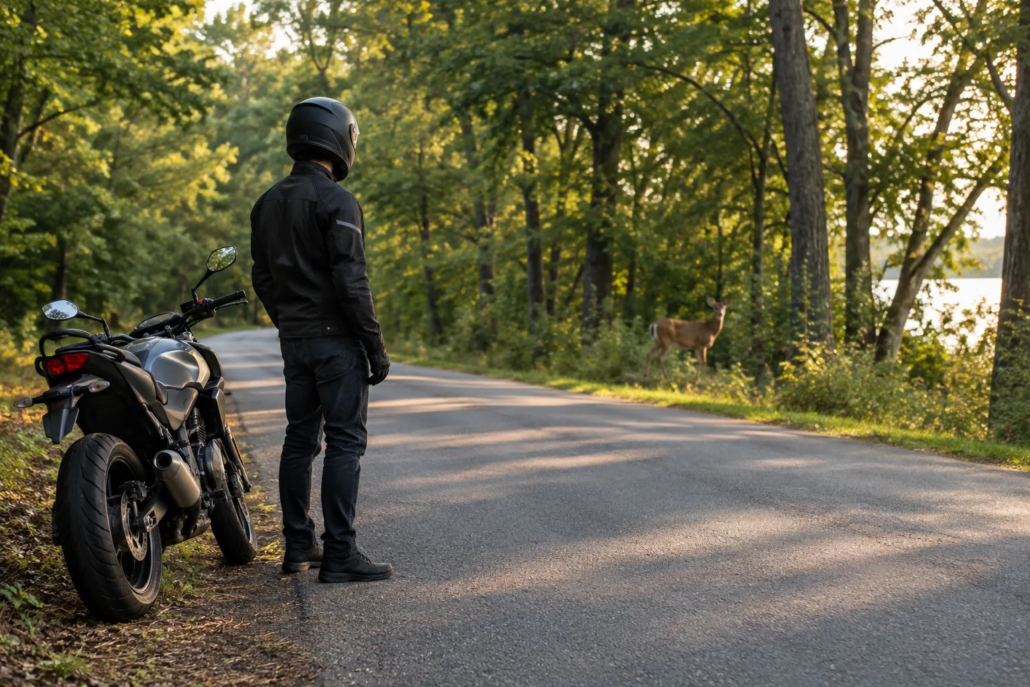
What Covers a Motorcycle Deer Crash Near Severna Park, MD?
A deer can appear suddenly on a road, leaving a motorcyclist little time to react. After a collision near Severna Park, the first concerns are safety and medical needs; insurance questions can follow once the immediate situation is under control. Riders looking for steps to protect a Maryland motorcycle crash claim may also want to understand how an animal collision differs from a crash involving another driver.
Motorcycle deer accident insurance in Maryland depends on the policy, the damage, and how the crash happened. Murnane & O’Neill offers information for riders considering these questions. This article explains immediate steps, records that may help document a claim, and policy coverages that could be relevant. It also explains why a rider’s own policy may be central when no other driver caused the collision.
Motorcycle deer accident insurance in Maryland: which coverage may apply?
A direct impact with a deer is generally treated differently from a collision caused by another vehicle. If the motorcycle strikes an animal, comprehensive coverage may apply to damage to the bike if the policy includes that coverage and its terms cover the loss. Comprehensive coverage is optional on many policies, and a deductible or exclusions may affect a claim. The policy wording—not the label alone—determines the details.
Collision coverage may be relevant if the motorcycle hits another object while the rider reacts to the deer, depending on the facts and policy terms. If the rider falls while braking or swerving without hitting the animal or another vehicle, the insurer may examine how the loss is classified. That can make the physical sequence important. A rider who swerves and crashes without contact may face different factual and insurance questions; see this discussion of a Maryland motorcycle claim after swerving to avoid a collision.
Coverage for injuries may be separate from bike repairs
Property-damage coverage and injury-related coverage are not interchangeable. Some motorcycle policies include medical payments coverage, which may help with eligible medical expenses subject to the policy’s terms and limits. Health insurance or other available coverage may also be relevant. Liability coverage generally addresses certain losses the insured causes to others; it does not automatically pay for the policyholder’s own motorcycle damage after hitting a deer.
A rider should check the declarations page and policy wording for coverage types, limits, deductibles, exclusions, and notice requirements. In Severna Park, as elsewhere in Maryland, the actual contract and collision facts matter more than a general description of a coverage type.
What should a rider document after a deer collision?
Once it is safe to do so, useful records can help establish what happened and what was damaged. Immediate priorities vary by situation, but riders commonly consider the following:
- Move away from traffic if possible and contact emergency services if anyone needs urgent help or the scene creates a safety concern.
- Make a note of the location, time, direction of travel, weather, road conditions, and what the rider recalls about the deer and impact.
- Photograph the motorcycle, visible damage, the roadway, and relevant surroundings when it is safe. Avoid approaching a wild animal that may be injured or unpredictable.
- Keep repair estimates, towing receipts, and records of custom parts or accessories. If the motorcycle may be a total loss, how a Maryland motorcycle total-loss payment may be evaluated can help explain why supporting records matter.
- Preserve insurance communications and record the date and substance of calls with the insurer.
If there are injuries, medical evaluation and documentation are separate concerns from repair records. Keep bills, treatment records, and insurance correspondence organized; this guide to medical bills to track after a Maryland motorcycle crash discusses those records. Reporting expectations can depend on the circumstances and policy. A police report may provide a useful record, but it does not decide coverage by itself. Riders in Severna Park or traveling toward Annapolis can also review practical steps to protect a Maryland motorcycle crash claim.
How does a deer crash differ from a crash caused by another driver?
When a rider hits a deer, there may be no other motorist whose negligence caused the impact. The rider’s policy may therefore be central to questions about motorcycle repairs and any available first-party injury benefits. This differs from a crash where another driver’s actions contributed to the collision. In that situation, a claim against that driver’s liability insurance may be considered, depending on the evidence and applicable law.
Underinsured motorist coverage is a separate issue. It generally concerns a crash involving an at-fault driver whose available liability coverage is insufficient for covered losses; it does not, by itself, establish coverage for a direct animal collision. For more on that distinction, see how underinsured motorist coverage may matter after a driver-caused crash.
The facts can be less straightforward when the rider swerves, falls, or is struck by a vehicle while avoiding the deer. The rider’s account, physical evidence, witness information, and any available incident report may help clarify the sequence. Maryland insurance and legal rules can depend on the circumstances, and rules may vary by location or change over time.
Also consider whose motorcycle was involved. When a bike is borrowed or rented, the rider may need to examine both the owner’s policy and any policy of their own rather than assume coverage follows the rider. This resource on which insurance may apply to a borrowed motorcycle outlines questions that can arise. A careful review should focus on the actual policy language and facts, not assumptions based on who was riding.
Frequently Asked Questions
Does comprehensive coverage usually apply if a motorcycle hits a deer?
Comprehensive coverage may apply to damage from a direct animal collision if the rider has that coverage and the policy terms include the loss. A deductible, exclusions, and claim conditions may affect what the insurer pays. Coverage is not automatic simply because the incident involved a deer. The declarations page and full policy wording are important, and the insurer may ask for details or documentation about how the collision occurred.
Should I report a deer collision if the motorcycle still runs?
A motorcycle that can still be ridden may have hidden damage, and an injury may not be immediately obvious. Reporting requirements can depend on the circumstances, applicable Maryland rules, and the policy’s terms. A report may help document the event, but it does not guarantee coverage or determine fault. Riders can review their policy’s notice instructions and consider whether a report is appropriate based on the scene and any injuries or property damage.
Can I make an insurance claim if I swerved but did not hit the deer?
Possibly, but the claim may be evaluated differently from a direct impact with an animal. The insurer may consider whether the loss falls under collision coverage or another provision, along with the policy language and evidence about the fall or impact. A crash involving another vehicle could raise additional questions about responsibility. The sequence of events and available records can matter, so avoid assuming that no animal contact means no potentially relevant coverage.
Could my insurance rate change after a deer collision?
A rate change is not something that can be predicted from the type of collision alone. The answer may depend on the insurer’s rating practices, policy terms, claim history, and applicable Maryland requirements. A rider can ask the insurer how a claim may be treated, while recognizing that a general answer may not resolve the specific effect at renewal. Keep the claim decision separate from any discussion about future premiums.
How Murnane & O’Neill Can Help
A deer collision can leave a rider sorting through safety concerns, repair documentation, and policy language at the same time. Murnane & O’Neill is dedicated to helping injured people understand the legal and insurance questions that may arise after a motorcycle crash. The firm can evaluate the circumstances, review relevant coverage issues, and explain options based on the available information. Riders with serious injuries, disputed coverage, or questions about a claim can explore motorcycle accident legal help in Severna Park. Contact Murnane & O’Neill to request a free consultation and discuss your situation.
The information in this article is for educational purposes only and does not constitute legal advice. Contact a qualified attorney authorized to practice in the jurisdiction that applies to your matter for advice specific to your situation.


Leave a Reply
Want to join the discussion?Feel free to contribute!