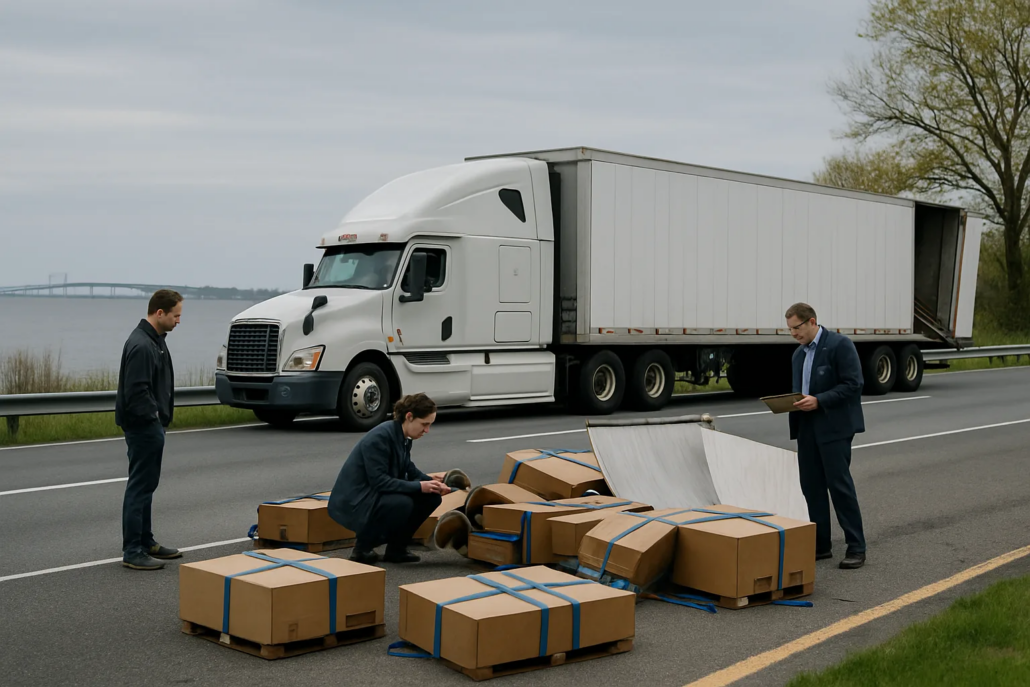
What Can a Maryland Cargo Shift Crash Lawyer Prove?
A truck traveling through the Annapolis area may carry construction materials, packaged goods, machinery, or other freight. If that cargo moves unexpectedly, falls from the trailer, or changes the truck’s balance, the result can be a serious collision. But who pays when cargo shifts and a truck crashes near Annapolis? The answer is not always limited to the driver.
For someone injured in an Annapolis or Glen Burnie crash, identifying the truck and preserving information about its load can be important. A cargo shift truck accident lawyer in Maryland may examine the driver’s conduct, the carrier’s policies, the shipper’s instructions, loading work, warehouse records, and vehicle maintenance. Murnane & O’Neill provides information and legal guidance for people evaluating these issues. This article explains how responsibility may be divided, what evidence can matter, and why prompt investigation is often significant.
Who May Be Responsible for a Cargo Shift Truck Accident in Maryland?
Cargo-related collisions often involve a chain of businesses and workers. A driver may be responsible if the driver knowingly operates a vehicle with an unsafe load, fails to perform required inspections, or drives in a way that contributes to the crash. However, a driver is not automatically liable simply because a load shifted.
The motor carrier and driver
The motor carrier may have responsibility when its hiring, training, supervision, dispatch, inspection, or cargo-securement practices contributed to the incident. A carrier may also be involved because it owns, leases, or controls the truck and employs the driver. The specific relationship between the driver and company matters under Maryland law.
The driver’s role may include checking whether cargo appears secure, following applicable safety procedures, and responding appropriately if the vehicle begins to handle differently. Whether those responsibilities were met generally depends on the facts, available records, and the condition of the load before and during the trip.
Shippers, loaders, and warehouses
A shipper or loading company may face scrutiny if freight was placed incorrectly, weight was distributed unevenly, restraints were inadequate, or loading instructions were incomplete. A warehouse or outside contractor may also be relevant if it physically loaded or secured the cargo. In some situations, a broker’s role in arranging transportation may matter, but a broker is not automatically responsible for every act by a carrier or loader.
In Annapolis, MD; Glen Burnie, MD, and elsewhere in Maryland, a claim may involve several potentially responsible parties. Determining who pays requires more than looking at the truck’s name or the first account of what happened.
What Evidence Can Show How an Improperly Loaded Truck Accident Happened?
A shifting-load investigation focuses on both the cargo and the sequence of events. Physical evidence can change quickly when a trailer is unloaded, a vehicle is repaired, or freight is moved to another location. The truck, trailer, tie-downs, pallets, containers, and damaged cargo may help show how the load was arranged and whether it remained secure.
Important information may include:
- Photographs or video of the crash scene, trailer, cargo, restraints, roadway, and vehicle damage.
- The truck’s identifying information, including its company name, USDOT number if visible, trailer details, and license plate information.
- Bills of lading, shipping documents, delivery records, loading checklists, and warehouse records.
- Driver logs, inspection reports, dispatch communications, electronic data, and onboard camera footage when available.
- Maintenance records involving the trailer, doors, suspension, flooring, tie-down points, or other equipment related to cargo security.
- Witness accounts, police reports, emergency response records, and statements from people who saw the load before or after the collision.
Maryland crash reports may provide an initial account, but they may not resolve whether the cargo was improperly loaded or whether a restraint failed. Depending on the circumstances, an attorney may seek relevant records from the carrier, shipper, loader, warehouse, or other businesses. Anne Arundel County law enforcement and courts may become part of the process when a crash occurs near Annapolis, while incidents near Glen Burnie may involve different local agencies or venues. The applicable Maryland procedure depends on the facts and location.
What Should Injured People Know Before Pursuing an Unsecured Cargo Crash Claim?
A cargo-shift claim generally requires proof that a person or business owed a duty of reasonable care, failed to meet that duty, and caused compensable harm. More than one party may share responsibility, and a party’s formal role does not by itself establish liability. Maryland’s rules concerning fault, damages, insurance, and filing deadlines can affect a personal injury claim, and those rules may vary by situation or change over time.
Common mistakes can make an investigation more difficult:
- Failing to identify the truck. A partial company name, trailer color, route, or witness photograph may help connect the vehicle to a carrier and shipment.
- Assuming the driver is the only possible defendant. The driver may not have loaded the cargo, chosen the packaging, or maintained the trailer.
- Relying only on photographs of the outside of the truck. Loading documents, inspection records, and communications may be important to understanding what happened.
- Giving a detailed statement before the facts are clear. Insurance representatives may ask for information before all evidence has been collected. A person may wish to understand the purpose and scope of a statement before providing it.
- Ignoring medical or employment documentation. Records concerning treatment, restrictions, missed work, and out-of-pocket costs may help document the effects of an injury. They should be handled carefully and accurately.
A lawyer evaluating truck loading negligence in Maryland may work with investigators or qualified experts to examine the cargo system, vehicle dynamics, and available records. The goal is to test each possible explanation rather than assume that a visible load shift tells the entire story.
Frequently Asked Questions
Can a shipper be liable if a truck’s cargo shifts in Maryland?
Possibly. A shipper may be relevant when it selected packaging, provided loading instructions, arranged the freight, or controlled part of the loading process. Liability depends on the shipper’s actual role, whether reasonable care was used, and whether that conduct caused the crash and resulting harm. A shipper is not automatically responsible merely because its goods were on the truck. The available contracts, shipping records, photographs, and witness information may help clarify that role.
Does the trucking company pay for every cargo-related crash?
Not necessarily. A motor carrier may have responsibility for its own conduct or, depending on the working relationship and Maryland law, for conduct connected to its driver’s work. But another business may have loaded the trailer, packaged the goods, supplied defective restraints, or maintained equipment. Insurance coverage and legal responsibility are separate questions. A fact-specific review may be needed before determining which parties and policies could be involved.
What if cargo fell from a truck but there was no direct collision?
A person may still have a potential injury claim if falling or scattered cargo created a hazard that caused a crash, evasive maneuver, or other physical harm. The absence of contact between the truck and an injured vehicle does not automatically resolve causation. Scene photographs, video, witness accounts, roadway evidence, and the truck’s identifying information may be useful. Maryland law governs the evaluation of duty, fault, causation, and damages.
Can I bring a claim if I do not know which company loaded the truck?
Possibly. The carrier, trailer information, shipping documents, police materials, witnesses, and discovery during a legal case may help identify the loader or other businesses. Early information can be useful because cargo and records may be moved or retained by different entities. An attorney can explain potential investigation methods and applicable Maryland requirements without assuming that an unidentified party is responsible.
How Murnane & O’Neill Can Help
Murnane & O’Neill is dedicated to helping injured people understand the issues that can arise after truck and personal injury crashes. The firm can evaluate the available information, consider the roles of the driver, carrier, shipper, loader, broker, warehouse, and maintenance personnel, and help identify questions about insurance and evidence.
The firm is committed to fighting for clients’ rights while presenting their circumstances accurately and carefully. If you were injured in a cargo-related truck crash in Annapolis, MD; Glen Burnie, MD, or elsewhere in Maryland, contact Murnane & O’Neill for a free consultation or case evaluation.
The information in this article is for educational purposes only and does not constitute legal advice. Contact a qualified attorney licensed in Annapolis, MD; Glen Burnie, MD for advice specific to your situation.