
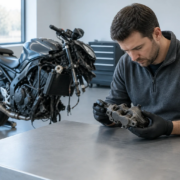
Can a Failed Motorcycle Part Support Maryland Injury Claims?
A crash can leave a rider asking whether a motorcycle component failed before impact or was damaged by the collision. In Anne Arundel County, a defective motorcycle part injury claim in Maryland may be worth exploring when a component’s condition contributed to the crash or made the resulting harm worse. Murnane & O’Neill helps riders understand how product liability may fit alongside other personal injury issues. This article explains what kinds of defects may matter, what evidence to preserve, and why it can be important to pause before repairing or disposing of the motorcycle.
When Can a Defective Motorcycle Part Support an Injury Claim in Maryland?
A product liability claim may be considered when a motorcycle or one of its components had a defect that contributed to an injury. A defect is not established simply because a part broke in a crash. The timing and cause of the failure matter: a collision may break a properly functioning component, while a pre-impact failure may have played a role in the collision.
Potential concerns can include a manufacturing flaw in an individual part, a design problem affecting a product line, or inadequate instructions or warnings. Parts that could be involved vary by circumstances and may include brakes, tires, steering components, suspension, fuel systems, or protective equipment. A technical inspection may be needed to distinguish a defect from ordinary wear, improper installation, poor maintenance, or crash damage.
Did the part cause the crash or worsen the injuries?
The distinction can shape what evidence matters. For example, a mechanical failure might contribute to loss of control. In a different situation, a helmet or another protective component might be alleged to have failed to reduce harm after a crash caused by something else. Preserving relevant equipment may be important in either type of investigation; see this discussion of preserving motorcycle helmet evidence after a crash.
Who may be responsible?
Depending on the facts, a claim may involve a manufacturer, seller, distributor, or another party connected to the product. The applicable legal theory and proof depend on the circumstances and Maryland law. A rider’s maintenance history and how the motorcycle was used may also be relevant. Riders in Annapolis and Arnold may benefit from a careful review of both the physical evidence and the events leading up to the crash.
How to Preserve a Motorcycle After a Crash
The motorcycle and failed component may be central physical evidence. If it is feasible and safe, avoid changing their condition before the evidence has been documented and the preservation question has been considered. That does not mean every damaged motorcycle must be stored indefinitely; storage, insurance, and safety issues may need to be balanced with evidence needs.
Useful steps to consider generally include:
- Photograph the motorcycle and the suspected failed part from several angles, including close views and wider views that show where the part is located.
- Keep removed or detached components together, and note who handled them and when, if that information is available.
- Save purchase receipts, service invoices, maintenance notes, warranty materials, and communications about repairs or prior problems.
- Record the motorcycle’s make, model, year, mileage, and any known modifications, without altering the physical evidence to collect those details.
- Keep relevant damaged riding equipment, such as a helmet, if its condition may relate to the crash or injuries.
Before authorizing repairs, replacing parts, or allowing the motorcycle to be scrapped, riders may want to understand how those changes could affect a later inspection. These steps to avoid after a motorcycle crash offer related post-crash considerations. If an insurer declares the bike a total loss, that property-damage valuation is separate from preserving evidence for an injury claim. Read about how a Maryland motorcycle total-loss payment is evaluated.
Building the Evidence and Avoiding Common Missteps
Product claims often require more than showing that a part broke. An investigation may compare the component’s condition with its design, installation, maintenance, and use. Depending on the case, qualified technical professionals may inspect the motorcycle, review available records, and consider whether the failure occurred before or during the crash. The rider’s account, photographs, witness observations, and crash-related records may help establish the sequence of events, but none should be treated as a substitute for physical inspection when one is appropriate.
In Anne Arundel County, including Annapolis and Arnold, the legal and factual analysis is governed by Maryland law and applicable court procedures. The forum and process for a claim depend on factors such as the parties and issues involved. Laws and procedures can change and may differ from those in other states, so general information cannot determine how a particular claim will be handled.
Common evidence problems can arise when a motorcycle is repaired, discarded, or substantially altered before the failed part is documented. Records can also become harder to locate over time. Early guidance may help a rider consider practical preservation options and communicate about access to the motorcycle. Learn more about when to consult a Maryland personal injury lawyer when technical evidence may need prompt attention.
A product claim may exist alongside other possible claims, but the available theories depend on the evidence and applicable law. A lawyer can evaluate how the product issue relates to the crash, injuries, insurance communications, and any property-damage dispute. No single photograph or failed component automatically proves liability; the full circumstances matter.
Frequently Asked Questions
Does a broken motorcycle part automatically mean it was defective?
No. A part can break because of crash impact, wear, improper installation, maintenance issues, or a defect. Determining what happened may require examining the component and the surrounding evidence, such as service records and photographs. A broken part can be a reason to investigate, but it does not by itself establish that a manufacturer or another party is legally responsible.
Can a claim involve a part that made injuries worse but did not cause the crash?
Potentially. A product-related issue may concern whether equipment performed as expected after a crash, rather than whether it caused the collision. For instance, a protective component’s condition could be relevant to how injuries occurred. The evidence must connect the alleged failure to the harm, and the legal analysis depends on the facts and Maryland law.
What if the motorcycle has already been repaired or sold?
That may make some physical evidence harder to examine, but it does not automatically answer whether a claim is possible. Photos, removed parts, repair invoices, purchase records, and communications may still provide useful information. The effect of a repair or sale depends on what changed, what evidence remains, and the circumstances. A lawyer can assess available options based on the specific record.
Do I need maintenance and purchase records for a product claim?
They can be useful, though the records available will vary. Purchase documents may help identify the product and its history, while maintenance and repair records may help show how it was used or serviced. Missing records do not necessarily resolve the claim. Other evidence, including the component itself and witness or crash documentation, may also matter.
How Murnane & O’Neill Can Help
Murnane & O’Neill is dedicated to helping injured riders understand the issues that may arise after a motorcycle crash, including whether a product defect deserves investigation. The firm can review available records, the condition of the motorcycle and component, and how the suspected failure may relate to the crash or injuries. Any evaluation depends on the specific facts and applicable Maryland law; no outcome can be promised. If you are in Annapolis, Arnold, or elsewhere in Anne Arundel County, contact Murnane & O’Neill to discuss your situation and request a free consultation or case evaluation.
The information in this article is for educational purposes only and does not constitute legal advice. Contact a qualified attorney licensed in Maryland for advice specific to your situation.


