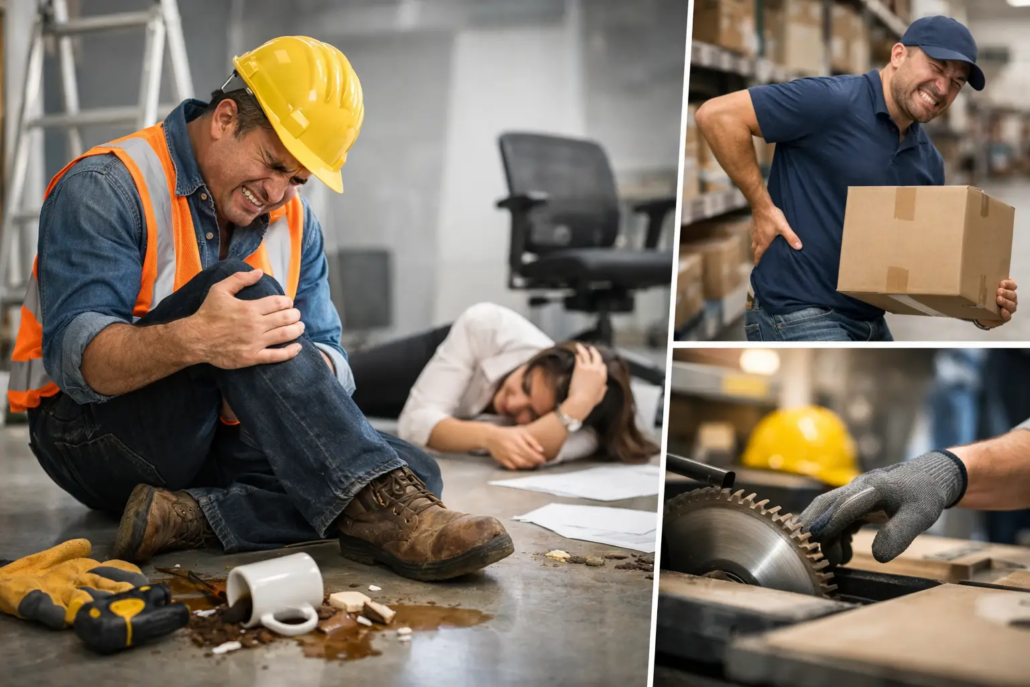
Top Causes of Workplace Injuries at Work
A worker can do everything right, show up on time, follow instructions, and still end the day in an ambulance. That is the hard truth behind the top causes of workplace injuries. In Pasadena, Maryland and across Anne Arundel County, many job-related injuries do not come from freak accidents. They come from predictable hazards, repeated shortcuts, poor maintenance, and unsafe job conditions that should have been addressed before someone got hurt.
When you understand what causes these injuries, you can better protect yourself and recognize when an employer, contractor, or third party may share responsibility. For injured workers, that matters because medical bills, lost income, and long recovery periods can turn a single bad shift into a serious financial problem.
The top causes of workplace injuries workers face most often
Most workplace injuries fall into a handful of recurring categories. The setting may change from a warehouse to a construction site to an office, but the causes are often the same. A wet floor, rushed training, broken equipment, or repeated physical strain can lead to injuries that affect a worker for months or even years.
What makes these incidents especially frustrating is that many are preventable. Safety rules are not suggestions. They exist because the risks are known, and when those rules are ignored, workers pay the price.
Slips, trips, and falls
Falls remain one of the most common reasons workers get hurt. In some jobs, that means falling from ladders, scaffolding, roofs, or elevated platforms. In others, it is as simple as tripping over cords, slipping on a spill, or falling on uneven flooring.
These incidents are often brushed off as minor until the diagnosis comes back. A fall can cause a fractured wrist, torn ligaments, spinal damage, a concussion, or a traumatic brain injury. For older workers especially, a fall can lead to a long and difficult recovery. Even when the height is low, the consequences can be serious.
In Pasadena workplaces, these cases often involve preventable conditions such as poor housekeeping, bad lighting, missing guardrails, and ignored repair needs. Where the fall happened and who controlled the area can make a real difference in a legal claim.
Overexertion and repetitive stress
Not every workplace injury happens in a dramatic moment. Many happen slowly. Lifting, pushing, pulling, carrying, twisting, and repeating the same motion day after day can damage muscles, tendons, joints, and discs.
Overexertion injuries are common in construction, shipping, manufacturing, health care, and warehouse jobs, but they also affect office workers and service employees. Back injuries, shoulder tears, knee damage, and carpal tunnel symptoms often begin as manageable pain and then become disabling.
These cases can be harder to prove because there is not always a single accident date. That does not make the injury less real. If your work duties caused the condition or made it worse, that deserves serious attention.
Struck-by and caught-in accidents
A worker does not need to fall to suffer a catastrophic injury. Being hit by tools, falling materials, vehicles, or moving machinery can lead to broken bones, crush injuries, amputations, and head trauma. Caught-in or caught-between accidents are especially dangerous on construction sites and in industrial settings.
Forklifts, conveyor systems, compact equipment, and unsecured loads all create obvious risks. The legal issue is often not whether the hazard existed, but whether proper safety steps were ignored. In some cases, a third-party contractor, equipment company, or property owner may have contributed to the injury.
Machinery and equipment failures
Workers rely on tools and equipment that are supposed to function safely. When machines malfunction, guards are removed, or maintenance is skipped, the results can be devastating. Power tools, presses, saws, hoists, and industrial machines can cause life-changing injuries in seconds.
There is often a chain of failure in these cases. An employer may have ignored a repair issue. A manufacturer may have released a defective product. A supervisor may have pushed workers to keep operating unsafe equipment to avoid delays. It depends on the facts, but equipment-related claims often require a close look at more than one responsible party.
Why the top causes of workplace injuries keep repeating
The most common hazards are not mysteries. They repeat because productivity is often prioritized over protection. Workers are told to move faster. Training is cut short. Safety complaints are brushed aside. Temporary fixes become permanent habits.
Some employers have strong safety cultures. Others treat safety as paperwork. That difference matters. A workplace with proper inspections, realistic staffing, working equipment, and real accountability tends to have fewer injuries. A workplace that relies on rushed onboarding and constant improvisation tends to see the same accidents happen over and over.
Fatigue also plays a major role. Long shifts, physically demanding work, and pressure to keep up can lead to poor judgment and slower reaction times. A tired worker is more likely to miss a hazard, misuse equipment, or get hurt performing a routine task.
Vehicle-related incidents on the job
Many workers are injured while driving or working around vehicles. Delivery drivers, utility workers, road crews, sales employees, and construction workers face risks from traffic, loading zones, and heavy equipment. A crash during work can create both a workers’ compensation claim and, in some situations, a claim against the at-fault driver.
That distinction matters because workers’ compensation and third-party injury claims are not the same. One may cover medical treatment and wage loss, while the other may allow recovery for broader damages. The facts need to be reviewed carefully from the start.
Exposure to harmful substances
Some injuries are immediate, such as burns, chemical splashes, or breathing problems after toxic exposure. Others develop over time, especially when workers are exposed to fumes, dust, solvents, or industrial chemicals without proper protection.
These cases are easy to underestimate in the beginning. A worker may think the symptoms will fade, only to end up with long-term respiratory issues, skin damage, or another serious condition. Documentation matters here. Reporting the exposure, getting prompt medical care, and connecting the condition to the job can be critical.
Violence in the workplace
Workplace injuries are not always accidental. Health care workers, retail employees, public-facing staff, and service workers can be hurt by assaults, altercations, and other violent incidents. These claims may involve workers’ compensation, negligent security issues, or failures by an employer to address known threats.
No one should be told that violence is just part of the job. If an employer ignored warning signs or failed to take reasonable steps to protect workers, that deserves scrutiny.
What injured workers in Pasadena should do after an accident
After a workplace injury, the first priority is medical care. The second is protecting your claim. Report the injury as soon as possible, describe how it happened clearly, and do not minimize what you are feeling. Small-sounding symptoms can turn into major diagnoses later.
If possible, keep records of the incident, witnesses, photos, medical visits, work restrictions, and time missed from work. These details often become important when an employer or insurance company starts questioning what happened or how serious the injury is.
Workers are often surprised by how quickly a valid claim can become a fight. Benefits may be delayed. Medical treatment may be challenged. The employer may argue that the injury happened somewhere else or claim it was a preexisting problem. That is one reason direct attorney involvement matters early.
For workers in Pasadena and nearby communities, experienced legal guidance can help determine whether the case involves only workers’ compensation or whether there is also a third-party claim that could increase recovery. Injury Attorney Jake Senkel understands that injured workers do not need runaround or delay. They need direct answers and aggressive representation focused on protecting their future.
You can also review general Maryland injury resources here: https://accident.usattorneys.com/maryland/
A workplace injury claim is not just about filing paperwork. It is about making sure the full impact of the injury is taken seriously. That includes your medical treatment, your income, your ability to work, and the pressure this puts on your family.
Unsafe work conditions rarely improve on their own. They change when injured workers speak up, document what happened, and take their rights seriously. If you have been hurt on the job, the right next step is the one that protects your health first and your claim before the insurance company defines it for you.