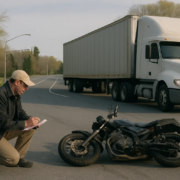
Why Do Maryland Truck Motorcycle Lawyers Need Your Evidence?
A motorcycle and a commercial truck can occupy the same roadway, yet the people involved may experience the collision very differently. A truck driver may say the motorcycle was difficult to see. The rider or family may see a missed signal, an unsafe turn, debris, or a failure to recognize the motorcycle’s position. Afterward, the available evidence may not immediately answer what happened.
That is why a truck motorcycle accident lawyer in Maryland may need to examine much more than a police report. Photographs, helmet and gear preservation, medical records, witness details, vehicle damage, and a careful motorcycle inspection can all help clarify disputed facts. For injured riders and families in Annapolis, MD; Arnold, MD, Murnane & O’Neill provides a knowledgeable starting point for understanding the investigation process.
This article explains why these crashes are challenging, how physical and medical evidence may matter, and what common evidence problems can complicate a motorcycle injury claim Maryland families are considering.
Why Are Truck-Motorcycle Crashes So Difficult to Investigate in Maryland?
Large trucks and motorcycles create an unusual evidence problem: their size, position, and movement can make the same event appear different from each driver’s perspective. A truck’s height can create areas where a motorcycle is difficult to see, but the existence of a blind spot does not by itself determine fault. Investigators may need to evaluate mirrors, camera systems, roadway geometry, traffic signals, speed, and the timing of each vehicle’s movement.
Sight lines and lane position can change quickly
A motorcycle may move from a truck driver’s visible area into a blind spot within seconds. The rider’s lane position, the truck’s mirror adjustment, nearby traffic, lighting, and whether the truck was changing lanes can all matter. In a turn, a truck’s cab may begin moving one way while the trailer follows a different path, creating additional questions about clearance and timing.
Physical evidence may disappear
Road debris can be moved by traffic. Skid marks may fade. A damaged helmet may be discarded, and a motorcycle may be repaired before all relevant photographs are taken. Weather and roadway changes can also affect later observations. In an Annapolis, MD or Arnold, MD collision, prompt documentation may help preserve details that cannot be recreated easily.
A lawyer evaluating a commercial truck motorcycle collision may compare photographs, vehicle positions, damage patterns, available video, event data, roadway design, and witness accounts. No single item necessarily resolves every dispute, but several consistent sources may help build a clearer timeline.
What Evidence May Clarify a Motorcycle Hit by a Truck in Annapolis?
The investigation often depends on preserving evidence from both the crash scene and the injured rider’s recovery. Families may be focused on medical care, transportation, and work concerns, while important physical evidence remains vulnerable to loss. Depending on the circumstances, an attorney may help identify and request relevant materials before they are altered, repaired, or unavailable.
Important categories can include:
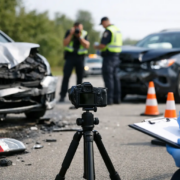
- Scene photographs: Images of vehicle positions, lane markings, traffic controls, road debris, lighting, roadway damage, and sight lines may help explain how the collision occurred.
- Helmet and protective gear: A helmet, jacket, gloves, boots, and other gear may document impact forces or explain the protection available during the crash. They should not be discarded simply because they appear replaceable.
- Medical records: Emergency records, diagnostic imaging, follow-up notes, rehabilitation records, and work restrictions may help document the nature and progression of claimed injuries. Medical professionals, not lawyers, determine diagnosis and treatment.
- Witness details: Names, contact information, vehicle descriptions, and what each witness actually observed may be important. A witness who saw the truck before the turn may provide different information from one who arrived afterward.
- Motorcycle inspection: Photographs and an inspection by a qualified professional may preserve information about steering, brakes, lighting, tires, controls, and impact damage. Repairs can change or remove evidence.
Maryland crash investigations may involve local law enforcement or the Maryland State Police, depending on where the collision occurred and which agency responded. A police report is useful, but it may not contain every photograph, witness statement, video source, or technical question relevant to a later claim. In Anne Arundel County, evidence may also include nearby business or residential video, though retention periods vary and footage is not always available.
What Mistakes Can Complicate a Maryland Truck Blind Spot Motorcycle Crash Claim?
People often assume that the physical damage will speak for itself. In a truck blind spot motorcycle crash, however, damage can be interpreted in different ways without information about speed, angle, lane position, and the sequence of movements. A motorcycle’s smaller size and extensive damage do not automatically establish who was responsible, just as a truck’s size does not automatically eliminate the rider’s potential arguments.
Several avoidable problems can make the factual investigation harder:
- Relying only on memory: Pain, stress, medication, and the passage of time can affect recollection. Writing down what was seen, heard, and experienced may help preserve details for later discussion.
- Posting crash details online: Photos or comments shared publicly may be viewed out of context. A person considering a claim may wish to discuss communications with counsel before making statements about fault or recovery.
- Giving a recorded insurance statement without understanding the purpose: Insurers may seek information about the crash and injuries. Depending on the circumstances, an attorney may advise on how to respond and what questions require clarification.
- Repairing or selling the motorcycle too soon: Repairs may be necessary, but photographs, an inspection, and preservation planning can be important before evidence changes.
- Ignoring the nonphysical effects of an injury: Medical care and work limitations should be documented through appropriate providers and records. A family should not assume that an injury is minor because the initial report is incomplete.
Maryland law governing liability, evidence, insurance, and filing deadlines can vary by location and may change over time. A potential motorcycle injury claim in Maryland may involve more than the truck driver. Depending on the facts, the investigation could examine a trucking company, maintenance decisions, loading practices, roadway conditions, or other contributing circumstances. Those possibilities require fact-specific analysis rather than assumptions.
Frequently Asked Questions
Should I keep my motorcycle after a truck collision in Maryland?
Keeping the motorcycle available may help preserve evidence about its condition, but storage, repair, and safety concerns can make that difficult. Before substantial repairs or disposal, photographs and an inspection may be useful. The appropriate approach depends on the motorcycle’s condition, ownership, insurance arrangements, and the issues being disputed. A Maryland attorney can explain preservation considerations in light of the specific collision.
Can a helmet or jacket help with a Maryland motorcycle injury claim?
Protective equipment may help document the impact and the condition of the rider’s gear after the collision. It may also help explain what equipment was being used, although it does not by itself prove fault or determine the extent of an injury. Because gear can be damaged or contaminated, families may wish to preserve it carefully and discuss its evidentiary value with a qualified attorney.
What if the truck driver says the motorcycle was in a blind spot?
A blind-spot statement is one fact to evaluate, not necessarily the conclusion of the investigation. Relevant questions may include where each vehicle was, how long the motorcycle was visible, whether a turn or lane change occurred, what mirrors or cameras were available, and whether signals were used. Witness accounts, photographs, vehicle data, and reconstruction evidence may help assess competing descriptions.
Do I need a lawyer if the police report blames the motorcycle rider?
A police report can be important, but it may reflect information available at the scene and may not resolve every technical or legal issue. If the report is disputed, additional evidence could include photographs, witness information, medical records, video, vehicle inspections, and roadway analysis. A truck motorcycle accident lawyer Maryland families consult can review the available facts and explain potential options without promising a particular result.
How Murnane & O’Neill Can Help
Murnane & O’Neill is dedicated to helping injured motorcyclists and families understand the evidence issues that can arise after a truck collision. The firm is committed to fighting for clients’ rights while carefully evaluating photographs, witness information, medical documentation, protective equipment, vehicle condition, and the circumstances described by each participant.
A thorough review may also consider whether additional investigation or reconstruction is appropriate and how Maryland rules may apply to the facts. The firm is ready to evaluate your situation and discuss available legal options. Contact Murnane & O’Neill for a free consultation or case evaluation regarding a truck-and-motorcycle collision in or around Annapolis, MD; Arnold, MD.
The information in this article is for educational purposes only and does not constitute legal advice. Contact a qualified attorney licensed in Annapolis, MD; Arnold, MD for advice specific to your situation.