
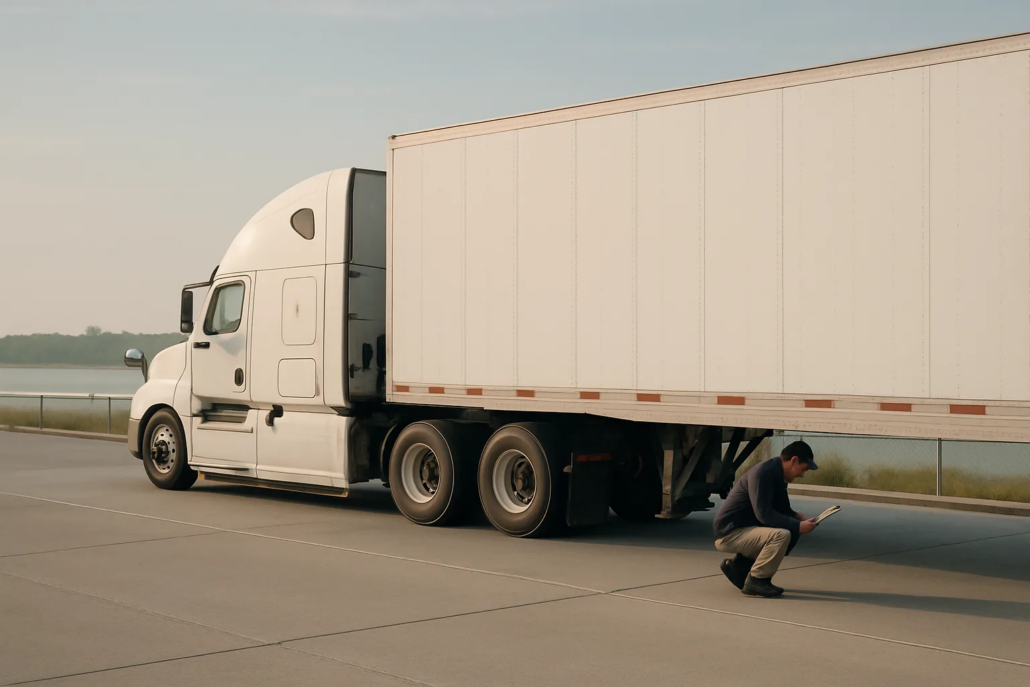
Could Truck Maintenance Records Clarify a Maryland Crash?
A truck crash can leave more questions than visible damage: Did the brakes work properly? Was a tire already damaged? Had a steering or coupling problem been reported before the collision? For people researching truck maintenance records after an accident in Maryland, those questions can make the truck’s inspection and repair history important evidence.
In Anne Arundel County, a commercial vehicle may be owned, leased, operated, or maintained by different businesses. Records may be held by a motor carrier, driver, repair facility, leasing company, or trailer owner. Murnane & O’Neill helps injured people understand what evidence may matter without assuming that a mechanical problem automatically establishes legal responsibility. A useful starting point is this Maryland truck accident evidence guide, which explains why records and other physical evidence should be preserved before they are altered or lost.
This article reviews the main maintenance documents, the truck systems that deserve attention, how vehicle preservation works, and common mistakes that can make a mechanical-failure investigation more difficult.
Which Truck Maintenance Records Matter After an Accident in Maryland?
Maintenance records are not limited to a single repair bill. The most useful evidence often comes from comparing what a carrier or owner was supposed to inspect with what was actually found, reported, repaired, or left unresolved.
Inspection reports and driver records
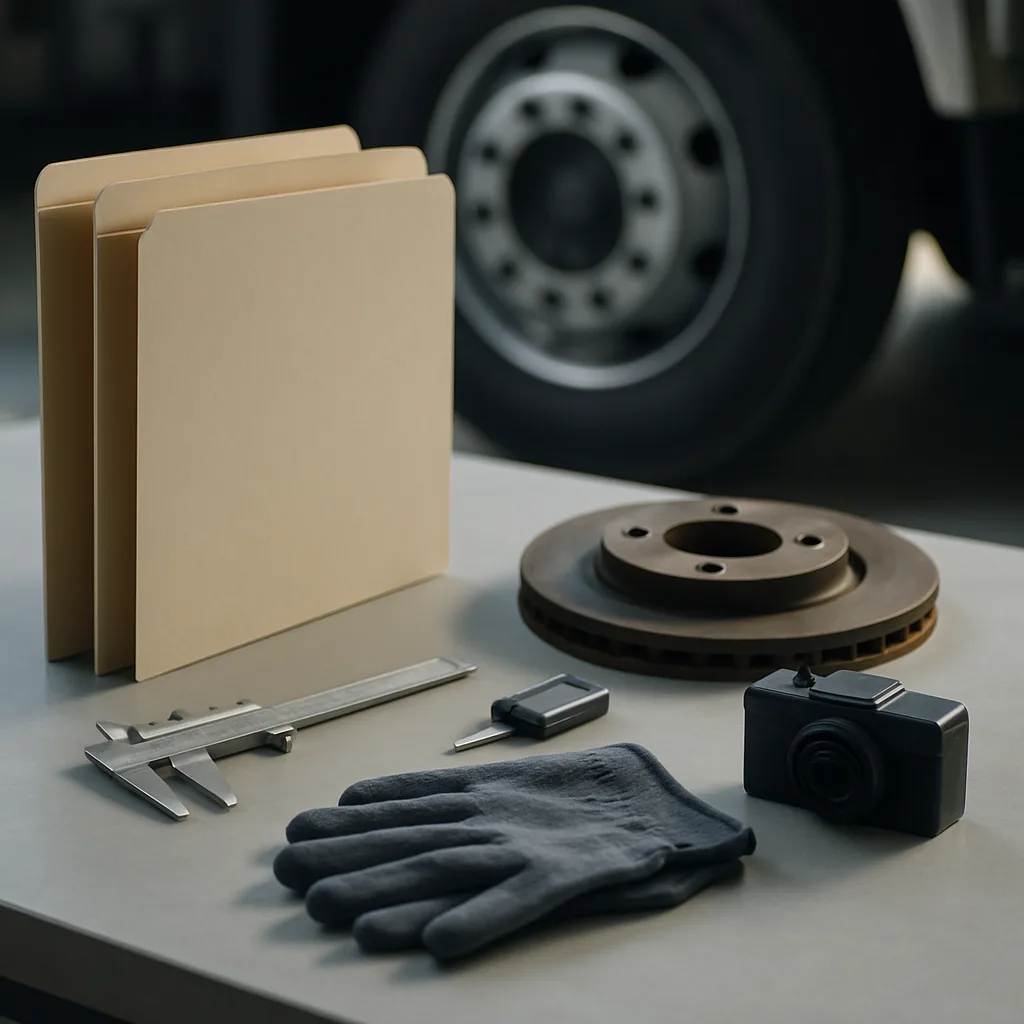
Potentially relevant records may include:
- Driver vehicle inspection reports prepared before or after a trip
- Periodic or annual inspection documents
- Preventive-maintenance schedules and service histories
- Work orders, repair invoices, parts records, and payment records
- Records of reported defects, deferred repairs, or out-of-service conditions
- Tire purchase, rotation, retread, pressure, and replacement records
- Brake adjustment, lining, drum, rotor, hose, and air-system records
- Trailer inspection and coupling-device records
A document’s date can be as important as its contents. An inspection completed shortly before a crash may help establish the vehicle’s condition at that time, while a repair performed after the collision may change or remove evidence of the original problem. That is why a prompt post-crash truck inspection by an appropriately qualified professional may be considered, depending on the circumstances.
In Annapolis, MD and Glen Burnie, MD, the records may be held outside Anne Arundel County. A carrier headquartered elsewhere can still have records relevant to a crash on a local roadway. Identifying who created, stored, and controlled each record is often part of understanding the evidence.
What Mechanical Systems Should a Truck Crash Investigation Examine?
A maintenance history may help distinguish a sudden, unexpected failure from a condition that developed over time or appeared in earlier inspections. It does not, by itself, prove that a particular person or company caused a collision. The surrounding facts, physical evidence, and applicable Maryland legal principles also matter.
Brakes, tires, steering, and lighting
A focused review may examine:
- Brakes: Air leaks, worn linings, damaged hoses, inadequate adjustment, or problems with drums, rotors, or related components may be relevant in a suspected brake-failure crash.
- Tires: Tread separation, improper inflation, sidewall damage, worn tread, mismatched tires, or prior repair records may matter in a truck tire blowout investigation.
- Steering and suspension: Records involving tie rods, steering linkages, wheel ends, suspension parts, or alignment may help explain a loss of control.
- Lighting and visibility equipment: Headlights, brake lights, turn signals, reflective devices, and conspicuity equipment may be significant when the collision involved nighttime or limited-visibility conditions.
- Coupling devices and trailers: Fifth wheels, kingpins, safety chains, landing gear, air lines, trailer doors, and other connection points may deserve review when a trailer separates, shifts, or behaves unexpectedly.
The common truck accident causes and liability resource provides additional context about how mechanical issues fit within the broader investigation of a commercial vehicle crash.
Why timing and consistency matter
Investigators may compare maintenance schedules, inspection results, driver complaints, dispatch records, and repair invoices. For example, a reported defect followed by repeated service deferrals may raise different questions than a component that failed without any documented warning. A repair invoice can also be incomplete without parts information, technician notes, photographs, or records showing whether the repair was tested.
For a crash near Annapolis or Glen Burnie, photographs of the truck, trailer, roadway, tire marks, detached parts, and visible damage may help preserve context while it is still available. These images should be taken safely and without interfering with an investigation.
Preserving the Truck and Connecting Records to Responsibility
Commercial trucks are often repaired, moved, inspected, or returned to service after a crash. Those steps can affect the condition of components that may later be examined. A person who was injured generally may not control the truck, but the vehicle’s condition and the identity of the record custodians can be raised through appropriate legal and investigative processes.
Who may have relevant information?
Depending on the trucking arrangement, records or decisions may involve:
- The driver, including pre-trip or post-trip defect reports and communications about vehicle problems.
- The motor carrier, including maintenance policies, scheduled service, inspection records, and decisions about whether to repair or dispatch the vehicle.
- A leasing company or vehicle owner, particularly where maintenance responsibilities were divided by contract.
- A repair shop or outside maintenance contractor, including work orders, technician notes, parts, and recommendations.
- A trailer owner or separate equipment provider, when a trailer or coupling device is involved.
This division of responsibility is one reason the question is not simply whether a part failed. Reviewing driver and trucking company liability can help readers understand why multiple entities may need to be identified before responsibility is evaluated. Records may support an argument about notice or unreasonable conduct, but the legal analysis depends on the facts and applicable Maryland law.
Common preservation mistakes
Potential problems include relying only on a carrier’s summary, accepting a statement that the truck was “inspected” without requesting the underlying documents, or overlooking trailer records. Another mistake is assuming that photographs of the crash scene replace an examination of the vehicle itself. Medical records, police reports, witness information, electronic data, and roadway conditions may also be relevant to the overall claim.
When a carrier controls access to a truck or announces plans to repair it, an attorney may evaluate whether formal preservation steps or an independent inspection are appropriate. People dealing with a crash in the county can review information about Glen Burnie truck accident lawyers when considering how to address evidence and potential claims.
Frequently Asked Questions
Can maintenance records prove that a truck driver or company was negligent?
Maintenance records may support a negligence argument, but they do not automatically establish liability. A lawyer or investigator may compare inspection duties, reported defects, repair recommendations, and the timing of service with the crash circumstances. Other evidence—such as photographs, witness accounts, vehicle data, roadway conditions, and medical documentation—may also be important. The evaluation is fact-specific and governed by Maryland law when the crash occurred in Maryland. For additional context on this issue, see How to Prove Truck Negligence After a Crash.
What if the trucking company says the truck was repaired after the crash?
A post-crash repair does not necessarily answer whether a defect existed before the collision. The timing, scope, and documentation of the repair may matter, as can photographs and inspection findings made before work began. An attorney may discuss preservation requests, records collection, or an inspection process suited to the circumstances. Injured people should avoid interfering with the vehicle or attempting to inspect commercial equipment themselves.
Are trailer maintenance records important in an Anne Arundel County crash?
Yes, they may be. A trailer can have separate ownership, maintenance, inspection, and repair records. Documents involving tires, lights, brakes, suspension, doors, landing gear, fifth-wheel components, kingpins, and air lines may be relevant depending on how the collision occurred. The records may be located outside Anne Arundel County, even when the crash happened in Annapolis, Glen Burnie, or another Maryland community.
How soon should someone ask about a post-crash truck inspection?
The appropriate timing depends on the vehicle’s location, the investigation, and the risk that repairs or disposal will alter evidence. Prompt legal guidance may help identify the truck, trailer, carrier, insurer, repair facility, and relevant records before access becomes more difficult. A person should also follow medical providers’ guidance regarding injuries and preserve ordinary claim information, such as photographs and communications, without making assumptions about legal deadlines.
How Murnane & O’Neill Can Help
Murnane & O’Neill is dedicated to helping injured people understand the evidence that may affect a truck accident claim in Anne Arundel County. The firm can evaluate questions involving maintenance histories, inspection reports, repair invoices, photographs, vehicle preservation, and the roles of drivers, carriers, owners, and maintenance contractors. Its team is committed to fighting for clients’ rights while recognizing that every crash requires a fact-specific review under Maryland law.
If you or a family member was injured in a truck crash near Annapolis or Glen Burnie, contact Murnane & O’Neill for a free consultation or case evaluation. The firm is ready to evaluate your situation and explain potential legal options.
The information in this article is for educational purposes only and does not constitute legal advice. Contact a qualified attorney licensed in Annapolis, MD; Glen Burnie, MD for advice specific to your situation.





Leave a Reply
Want to join the discussion?Feel free to contribute!