
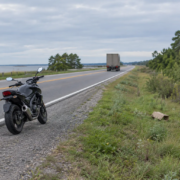
When Can Falling Cargo Cause a Maryland Motorcycle Claim?
A piece of lumber, a loose container, or another object falling from a truck can turn an ordinary ride into a sudden hazard. In a motorcycle accident involving falling cargo in Maryland, the key questions may include where the object came from, how it became unsecured, and whether the hazard caused the rider to crash. Murnane & O’Neill helps people understand the evidence that may matter in a personal injury claim. This guide explains what riders and witnesses can safely record, how investigators may trace a load and the crash sequence, and why prompt reporting and evidence preservation may be important. The details can be especially relevant on busy routes around Annapolis and Glen Burnie, where traffic conditions may affect what a witness can safely observe. No single photo or report automatically establishes responsibility; the available evidence and applicable law matter.
How investigators trace a motorcycle accident involving falling cargo in Maryland
A cargo-related crash investigation often starts with the object itself. Its material, shape, condition, and any distinctive features may help identify the load or vehicle it came from. The object’s location after the crash, together with debris patterns and damage, may help investigators assess whether it fell from a truck, shifted within a load, or came from another source.
Investigators may also consider how the cargo was packed and secured. Tie-downs, straps, chains, covers, and load placement can be relevant, as can records describing who loaded or inspected the truck. Whether a particular person or company had a role in those tasks depends on the shipment and the evidence. A closer look at the evidence used to prove a Maryland cargo-shift crash claim can help explain why loading and inspection details may matter.
What the cargo and load records may show
A photograph of an object may help document its appearance, but it may not identify who handled the load. Bills of lading, dispatch information, loading records, inspection documentation, and statements from people who saw the truck before the collision may provide additional context. Investigators may compare these materials with the object’s position and the physical scene.
Responsibility is not established simply because a truck was nearby. The inquiry may involve the cargo’s path, the timing of the hazard, and whether a specific act or omission contributed to it. In Annapolis, Glen Burnie, and elsewhere in Maryland, the facts of the particular incident guide that evaluation.
What riders and witnesses can safely record after a loose-cargo crash
Safety comes first. A rider or witness should not enter a live traffic lane or approach an unstable load to collect evidence. If there is an immediate danger or anyone needs urgent help, contacting emergency services may be appropriate. Otherwise, observations can be recorded from a safe location, when conditions allow.
Useful details may include:
- The object’s general description, approximate location, and where it came to rest.
- The truck or trailer’s color, shape, and visible identifying features, without following it or putting anyone at risk.
- The road, travel direction, nearby exits or intersections, weather, and traffic conditions.
- Where the motorcycle and other vehicles stopped, and what the witness saw immediately before the crash.
- Names and contact information for willing witnesses, if it is safe and appropriate to ask.
These kinds of scene details in a truck-and-motorcycle collision may help clarify the vehicles’ movements and the order of events. A rider might crash while braking or swerving to avoid debris without ever touching the truck. Evidence can still matter in a motorcycle crash caused by an evasive move without vehicle contact, because the link between the cargo hazard and the crash must be examined.
Why prompt reporting and preserved records may help
Reporting the collision promptly can create an official record and may allow responders to document a hazard while information is still available. Give accurate observations rather than guesses about who caused the crash. A police report or citation may inform an investigation, but neither necessarily decides civil responsibility; see how police records and a truck citation may inform a Maryland claim.
If available, keep original photographs and notes, along with relevant communications or records. Truck cameras or onboard systems may retain information about vehicle movement or braking for a limited period, depending on the system. Electronic truck data that may clarify the crash sequence can provide another perspective, but whether it exists or can be obtained depends on the circumstances.
Who may be responsible, and what common gaps can complicate a claim?
The truck driver may be one part of the investigation, but the driver is not automatically the only party to consider. Depending on the facts, a carrier may have had a role in the trip, the vehicle, or cargo procedures. Investigators may examine who loaded, inspected, or secured the cargo and what responsibilities each participant actually had. Whether a Maryland trucking carrier may share responsibility depends on evidence about its involvement, not simply the company name on a truck.
A shipper, loading contractor, or freight broker may also appear in shipment records. That connection alone does not establish responsibility. The relevant questions may include what the party agreed to do, what it actually did, and whether its conduct contributed to the load becoming hazardous. Learn more about how a freight broker’s role can affect a Maryland crash claim.
Common evidence gaps include an unidentified truck, missing witness contact details, unclear timing, or an object moved before it was documented. A witness may see a truck pass but not see the cargo fall, or may see a rider swerve without knowing what prompted it. These uncertainties do not resolve the claim by themselves, but they can make careful evidence gathering important.
In Anne Arundel County, including Annapolis and Glen Burnie, local law enforcement or other responders may document a crash depending on where it occurs and the circumstances. An investigation may later compare reports, photographs, witness accounts, vehicle damage, and available load or electronic records. Avoid assuming that one source—such as a citation, a photograph, or an initial account—answers every question. A Maryland attorney can explain how the relevant rules apply to a particular set of facts; laws and procedures may vary and can change.
Frequently Asked Questions
Can a truck driver or company be responsible if the motorcycle never hit the truck?
Possibly. A rider may crash while swerving or braking to avoid falling cargo, even without contact between the motorcycle and truck. A claim would generally depend on evidence connecting the cargo hazard to the crash and showing that a particular person’s or company’s conduct may have contributed. Witness accounts, timing, roadway evidence, and available truck or load records may help investigators assess that connection.
What should a witness note about cargo that fell from a truck?
From a safe place, a witness may note the object’s appearance and location, the truck’s visible identifying features, its direction of travel, and what happened just before the crash. Contact information for willing witnesses may also help. Do not step into traffic or approach an unstable object to get a closer look. Record observations accurately and distinguish what was seen from what is only assumed.
Can a carrier, shipper, or broker be included in a Maryland cargo crash investigation?
Those parties may be examined when their role in the shipment, loading, inspection, or transportation is relevant. Their presence in shipping records does not automatically make them responsible. The investigation may consider what duties a party undertook, what it did, and whether that conduct contributed to the hazard. The answer depends on the evidence and applicable Maryland law.
How soon should a falling-cargo motorcycle crash be reported?
Prompt reporting may help responders document the scene and may create a record while witness recollections are fresh. The appropriate steps depend on the immediate safety needs and circumstances. Emergency assistance should take priority where needed. A police report or citation can be useful information, but it does not necessarily settle who is legally responsible for a crash.
How Murnane & O’Neill Can Help
Murnane & O’Neill is dedicated to helping injured people understand the evidence and legal questions that may arise after a motorcycle crash. The firm can evaluate how accounts, photographs, load records, and available truck data may fit together, and whether additional parties may warrant review. Each situation is different, and no particular result can be promised. If a falling-cargo collision happened in Annapolis, Glen Burnie, or elsewhere in Maryland, contact Murnane & O’Neill to discuss your circumstances and request a free consultation or case evaluation.
The information in this article is for educational purposes only and does not constitute legal advice. Contact an attorney licensed to practice in Maryland for advice specific to your situation; laws vary by location and may have changed since publication.


