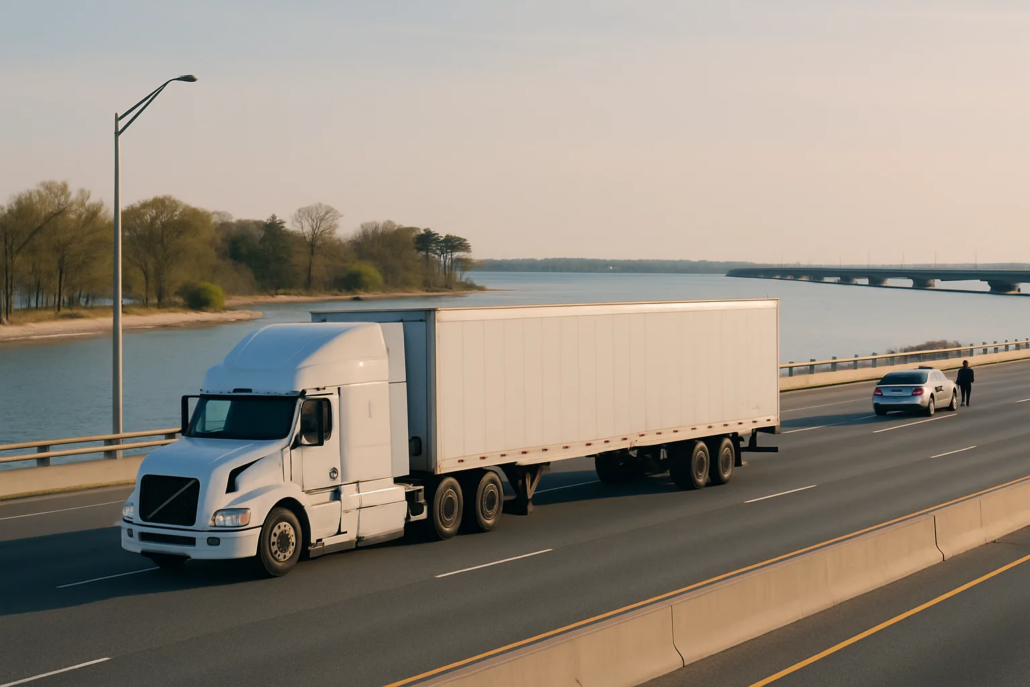
Why Maryland Trucking Company Liability Can Reach Carriers
A collision with a tractor-trailer, delivery truck, or other commercial vehicle can leave an injured person dealing with medical care, vehicle damage, missed work, and confusing insurance communications. A common question is: Is a trucking company liable for its driver’s crash in Maryland? The answer depends on facts such as the driver’s employment status, whether the driver was working, who owned or controlled the vehicle, and whether company practices contributed to the crash.
Murnane & O’Neill helps Maryland injury victims understand why identifying both the driver and the carrier may matter. The difference between driver and company liability in a commercial truck crash can be significant when evaluating available claims. This article explains employer responsibility, possible direct claims against a trucking company, insurance and evidence issues, and practical questions for people in Annapolis, Arnold, and Glen Burnie.
When Is a Trucking Company Liable for a Driver’s Crash in Maryland?
A company may be responsible for a driver’s negligence when the driver was an employee acting within the scope of employment. This general principle is often called respondeat superior. For example, a carrier may face a claim when its employee was making a delivery, traveling between assigned work locations, or otherwise performing assigned duties and caused a crash through careless driving.
That analysis is not automatic. The carrier may argue that the driver was an independent contractor, was outside the scope of work, or was using the vehicle for a personal purpose. The facts can include the written contract, who paid and directed the driver, who controlled routes and schedules, and who owned or leased the truck.
Why the driver and carrier both matter
The driver’s conduct and the company’s role are related but separate questions. A carrier might be involved because it employed the driver, owned the truck, arranged the shipment, supplied dispatch instructions, or provided insurance. In other cases, more than one business may have responsibilities connected to the vehicle or delivery.
For an accident near Annapolis, Arnold, or Glen Burnie, identifying the correct business can require reviewing the truck’s markings, crash report, cargo documents, registration information, and insurance materials. The company listed on a trailer is not necessarily the only potentially responsible entity.
Direct Claims Against a Trucking Company: Hiring, Training, and Safety
A trucking company can sometimes face a direct negligence claim based on its own conduct, separate from responsibility for an employee’s driving. The question may be whether the carrier used reasonable care when selecting, training, supervising, scheduling, and managing the driver or vehicle.
Potential areas of inquiry include:
- Whether the company checked the driver’s qualifications and driving history.
- Whether training addressed the type of truck, trailer, route, or cargo involved.
- Whether supervisors responded to known safety concerns or prior incidents.
- Whether dispatch practices encouraged unsafe speed, excessive hours, or distracted driving.
- Whether the company maintained required safety procedures and equipment.
A direct claim requires evidence connecting the company’s conduct to the crash and resulting harm. A driver’s mistake alone does not automatically prove negligent hiring or supervision. Personnel files, qualification records, training materials, disciplinary history, dispatch messages, and company policies may help clarify what the carrier knew or should have known. Read more about how inadequate truck driver training can support a Maryland negligence claim when assessing this issue.
Maryland cases may involve more than one theory of responsibility, but the available claims depend on the facts and applicable law. An attorney evaluating a truck accident in Anne Arundel County may examine whether the driver was properly qualified, whether the carrier’s instructions affected the conduct, and whether a company policy or management decision played a role.
Insurance Communications and Evidence After a Commercial Crash
Commercial carriers often have insurers, claims representatives, safety departments, and attorneys involved soon after a collision. An injured person may receive requests for statements, medical authorizations, photographs, or other information. Communications should be handled carefully because an early description of the crash or injuries may not capture the full situation.
Evidence can disappear through routine data retention, vehicle repairs, ordinary business practices, or the passage of time. Depending on the circumstances, useful material may include:
- The police or crash report, photographs, and witness contact information.
- The driver’s name, employer, carrier, vehicle owner, and insurance information.
- Electronic logging data, dispatch records, GPS information, and onboard camera footage.
- Driver qualification, training, drug-and-alcohol testing, and disciplinary records where relevant.
- Inspection, repair, service, defect, and post-crash maintenance records.
- Bills, wage records, medical records, appointment information, and documentation of vehicle damage.
Preserving the truck and its equipment can be important. A tire, brake component, trailer connection, lighting system, or other part may later need inspection. Truck maintenance records that may clarify the cause of a Maryland crash may help show whether a mechanical issue, inspection failure, or repair decision contributed to the collision.

For residents of Annapolis, Arnold, and Glen Burnie, local crash documentation may come from responding law enforcement or other agencies, while a claim may involve a carrier located elsewhere. A preservation request may be appropriate in some cases, but its scope and timing depend on the evidence and parties involved. A Maryland truck accident evidence guide for preserving a claim provides additional context about records, communications, and documentation.
Common Mistakes When Evaluating Trucking Company Liability
One mistake is communicating only with the driver’s insurer while overlooking the carrier, owner, broker, or other business involved in the shipment. Another is assuming that the company name on a truck immediately establishes liability. Employment contracts, leasing arrangements, dispatch records, and the driver’s work status may change the analysis.
Other issues that can complicate a commercial carrier accident claim include:
- Waiting to document vehicle damage or the accident scene.
- Posting photographs or opinions about the crash on social media.
- Giving a recorded statement before understanding which company or insurer is requesting it.
- Discarding damaged safety equipment, vehicle parts, or relevant receipts.
- Assuming that a crash report resolves every question about fault.
Generally speaking, an injured person may collect available documents, preserve communications, follow medical providers’ instructions, and keep a record of expenses and work absences. These steps do not establish liability by themselves, but they can help an attorney investigate the claim. Maryland deadlines and rules may apply, and the limitations period can depend on the parties and circumstances, including whether a governmental entity is involved.
When reviewing a trucking company, an attorney may ask who controlled the driver, vehicle, route, cargo, and safety decisions. The goal is to separate ordinary employer responsibility from a possible direct claim based on negligent hiring, training, supervision, maintenance, or dispatch.
Frequently Asked Questions
Can I sue a trucking company after an accident if the driver caused the crash?
Possibly, depending on the driver’s employment relationship and whether the driver was acting within the scope of work. A carrier may also face a separate claim based on its own conduct, such as inadequate training, supervision, maintenance, or dispatch practices. The company’s name on the truck is only a starting point. An attorney can review the crash facts, contracts, records, and applicable Maryland law.
What if the truck driver was an independent contractor?
Independent-contractor status may affect whether a carrier is vicariously responsible for the driver, but the label is not always the end of the analysis. Contracts, actual control, vehicle ownership, dispatch arrangements, and the work performed may matter. A company could also have separate responsibilities involving maintenance, hiring, training, or safety procedures. The result depends on the specific relationship and evidence.
Should I speak with the trucking company’s insurance adjuster?
An adjuster may request information while the investigation is still developing. An injured person may provide basic claim information, but a recorded statement, broad medical authorization, or settlement discussion can have legal significance. Depending on the circumstances, an attorney may help evaluate what information is relevant and how communications should be handled. Insurance practices and claim requirements can vary by policy and jurisdiction.
What records can help show a carrier’s responsibility?
Potentially useful records include the crash report, photographs, witness information, driver qualification and training materials, dispatch communications, electronic logs, onboard video, inspection records, repair invoices, and maintenance history. Medical and wage documentation may also relate to damages. Not every record will exist or be legally obtainable in every case. Early preservation can be important because some electronic and business records may not be retained indefinitely.
How Murnane & O’Neill Can Help
Murnane & O’Neill is dedicated to helping injured people understand the parties, insurance issues, and evidence involved in Maryland truck accident claims. The firm can evaluate questions about the driver’s work status, the carrier’s role, company policies, vehicle maintenance, and the effect of the crash on the injured person’s life.
The legal team is committed to fighting for clients’ rights while explaining the process in clear terms. If you were injured in a commercial vehicle crash in Annapolis, Arnold, Glen Burnie, or elsewhere in Maryland, contact Murnane & O’Neill for a free consultation or case evaluation.
Disclaimer: The information in this article is for educational purposes only and does not constitute legal advice. Contact a qualified attorney licensed in Annapolis, MD; Arnold, MD; Glen Burnie, MD for advice specific to your situation.