Which Details Support Annapolis Rideshare Driver Insurance?
A motorcycle ride through Annapolis can change quickly when a rideshare, delivery, or other app-based driver turns across a rider’s path. If you are searching for answers about Annapolis motorcycle accident rideshare driver insurance, the key question is often not simply who owns the vehicle. It may also be what the driver was doing in the app at the moment of impact. You can review coverage after an Annapolis Uber or Lyft crash for additional background on how an app-based driver’s status may affect available insurance.
Murnane & O’Neill helps injured people understand the evidence and insurance questions that can arise after a collision. This article explains what to save after a crash, why app status matters, how Maryland insurance issues may be evaluated, and which motorcycle-specific details insurers may raise. The same general considerations can apply in Annapolis, Glen Burnie, and Severna Park, although the facts of each collision are different.
How Rideshare Insurance May Apply After an Annapolis Motorcycle Accident
A rideshare or delivery driver may have more than one potentially relevant source of insurance. Depending on the facts, the driver’s personal auto policy, a rideshare or delivery company policy, or another applicable policy may need to be reviewed. The driver’s status at the time of impact can be especially important.
Why the app status matters
An app-based driver might be offline, logged in and waiting for a request, traveling to pick up a customer, carrying a passenger, or completing a delivery. Those different stages may affect which policy responds and the limits that could be available. A driver’s statement alone may not answer the question; electronic records, trip information, dispatch data, and insurer communications may also matter.
For example, a motorcycle crash involving an Uber driver in Maryland may raise different coverage questions depending on whether the driver was waiting for a ride request or actively transporting a passenger. A Lyft accident motorcycle claim in Annapolis may likewise require evidence showing the driver’s status, route, and assignment when the collision occurred. Delivery platforms can create similar questions even when no passenger was in the vehicle.
Do not assume that the first insurer you contact has identified every potentially relevant policy. Coverage issues can involve policy language, exclusions, Maryland insurance requirements, and the particular facts of the crash. Laws and policy terms can change, so an attorney may need to review the current documents and circumstances.
What Information Should You Save After a Motorcycle Collision?
Evidence can become harder to locate as vehicles are repaired, video is overwritten, and memories fade. If you are physically able, preserving basic information can help clarify both the collision and the driver’s work status. Maryland’s serious crash injury checklist can provide a useful starting point for documenting the immediate aftermath.
Consider preserving:
- The rideshare, delivery, or transportation company associated with the driver, if known.
- The vehicle’s make, model, color, license plate, and any distinctive damage or markings.
- The driver’s name, contact information, insurance information, and employer or platform details.
- Screenshots of app pages, trip receipts, delivery information, driver profiles, or messages that remain available to you.
- Photographs of the motorcycle, the other vehicle, the roadway, traffic signals, lane positions, skid marks, debris, and sight lines.
- Names and contact information for witnesses, including people who saw the moments before impact.
- The police report number, responding agency, exchange-of-information materials, and any citation or crash documentation you receive.
At intersections in Annapolis, Glen Burnie, and Severna Park, photographs should capture more than vehicle damage. Signal placement, turn lanes, parked vehicles, construction, lighting, and nearby businesses may help explain what each driver could see. Preserving the evidence an Annapolis intersection crash lawyer examines can be important when fault is disputed.
Do not edit screenshots or alter original photographs. Keep copies in a secure location and note when and how each item was obtained. Depending on the circumstances, an attorney may also consider whether nearby surveillance or vehicle data should be requested before it is no longer available.
How Should You Handle Insurance, Medical Records, and Coverage Gaps?
Insurance companies may ask for a recorded statement, photographs, medical authorization, or a description of how the collision happened. It is generally wise to understand what is being requested and why before providing detailed statements or signing broad documents. A policyholder’s own coverage may also matter if the rideshare driver is uninsured, underinsured, or covered only in a limited way.
Check for other potentially relevant coverage
If the other driver has no insurance, coverage is denied, or available limits do not address the losses involved, the injured rider’s own Maryland auto policy may require review. Depending on the policy and facts, uninsured or underinsured motorist coverage may be relevant. Information about how Maryland uninsured-driver claims work may help explain why a rider should preserve policy documents and insurer correspondence.
A rider should also keep a complete medical and financial file. This may include emergency department records, diagnostic results, treatment notes, prescriptions, bills, receipts, mileage information, and documentation of missed work. Keeping records can make it easier to track expenses while responsibility and coverage are being investigated. For more information, see handling medical bills after a Maryland injury accident.
Medical documentation should reflect the care actually received and the symptoms reported to healthcare professionals. This article does not diagnose injuries or recommend treatment. Prompt evaluation may be important for health reasons, but decisions about care should be discussed with a qualified medical professional.
Motorcycle-specific issues may arise
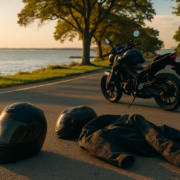
An insurer may ask whether the rider wore a helmet, whether protective equipment was used, and whether the motorcycle had visible damage before the collision. Preserve the helmet, clothing, and other equipment rather than discarding or repairing them before they can be documented. Evidence about helmet use is a separate issue from determining which insurance policy applies. You can read about how Maryland’s helmet law may affect an Annapolis injury claim.
What Common Mistakes Can Complicate a Rideshare Motorcycle Claim?
The days after a crash can involve pain, transportation problems, calls from insurers, and uncertainty about what to do next. Several avoidable problems can make the coverage investigation more difficult:
- Failing to identify the platform. A rider may record only the driver’s personal insurance information and overlook whether the vehicle was being used for Uber, Lyft, a delivery service, or another app-based business.
- Not recording app evidence. If a trip receipt, driver profile, delivery message, or pickup detail is available, it may help identify the driver’s work status. Save it in its original form when possible.
- Assuming the police report resolves fault. A report can be valuable, but it may not contain every witness account, video source, app record, or insurance issue.
- Giving inconsistent descriptions. Write down what you remember while it is fresh, but avoid guessing about speed, distance, or app status when you do not know.
- Discarding physical evidence. Helmets, damaged clothing, motorcycle parts, and photographs may help document the event and the claimed losses.
- Discussing the claim publicly. Social media posts, photographs, or comments can be taken out of context during an insurance investigation.
In an Annapolis, Glen Burnie, or Severna Park collision, a lawyer may help organize records, identify potentially relevant policies, communicate with insurers, and investigate disputed facts. That review does not guarantee coverage or a particular result. It is intended to help determine which legal and insurance questions require closer attention.
Frequently Asked Questions
Does the rideshare company automatically pay for every motorcycle collision?
No. A rideshare or delivery company’s insurance may depend on the driver’s app status, the type of assignment, the policy terms, and the facts of the collision. The company may not be responsible simply because its app was installed or the vehicle displayed a platform-related item. Reviewing trip records, driver information, insurance documents, and the police materials may help identify which coverage sources could apply.
What if I do not know whether the driver was working?
Preserve everything you do know, including the vehicle information, driver details, photographs, witness contacts, police report information, and any messages or trip details. The driver’s app status may later be explored through insurer records, platform information, or other evidence. Avoid guessing about whether the driver was working. A lawyer can explain what information may be relevant to evaluating that question.
Can my own insurance matter after a crash with an Uber or Lyft driver?
It may. Depending on the policy and circumstances, your own uninsured or underinsured motorist coverage could become relevant if the other driver lacks adequate coverage or a coverage dispute develops. Your policy language and Maryland law govern the analysis. Preserve your declarations page, policy communications, and any insurer correspondence for review rather than assuming the other driver’s policy is the only possible source of compensation.
Should I keep my motorcycle and helmet after the collision?
Generally, preserving the motorcycle, helmet, clothing, and damaged equipment can help document the collision and claimed injuries. Avoid discarding, cleaning, repairing, or modifying those items before they can be photographed and evaluated, unless a safety or storage concern requires action. Keep receipts and repair estimates as well. Questions about preservation can depend on the item’s condition and the circumstances of the claim.
How Murnane & O’Neill Can Help
Murnane & O’Neill is dedicated to helping injured riders and other collision victims evaluate the facts surrounding a Maryland personal injury claim. The firm can review the driver’s app status, available insurance information, photographs, witness accounts, police materials, medical records, and other evidence that may help explain what happened.
The team is committed to fighting for clients’ rights while providing a careful, fact-based assessment of their legal and insurance options. If you were involved in a motorcycle collision with an Uber, Lyft, delivery, or other app-based driver in Annapolis, Glen Burnie, or Severna Park, contact Murnane & O’Neill for a free consultation or case evaluation.
The information in this article is for educational purposes only and does not constitute legal advice. Contact a qualified attorney licensed in Annapolis, MD; Glen Burnie, MD; Severna Park, MD for advice specific to your situation.